Working with the Carlisle United Heritage Group
Digitising and Animating Club History
PROFESSIONAL DEVELOPEMENT
11/21/20254 min read
Working with the Carlisle United Heritage Group: Digitising and Animating Club History
This project originated through our morning lectures with Ed Cooper, who acted as the initial point of contact between the course and the Carlisle United Heritage Group, based on the University of Cumbria’s Brampton Road campus in Carlisle (Fig. 2, Fig. 3 and Fig. 4). At the outset, neither Ed nor the Heritage Group had a fixed plan for how the final piece would take shape. Instead, the brief was intentionally open, with the expectation that we would explore ideas collectively and respond to the practical constraints as they emerged.
For that reason, Ed brought together students from both Animation and Film/TV to collaborate and pool our skill sets. Early discussions focused on how to present the archival material in a way that felt engaging but respectful. As a group, we agreed that parallax animation offered the best solution: it allowed the still images to feel animated and dimensional without overpowering the historical significance of the photographs.
The initial phase involved digitising the archive. Another student and I scanned close to ninety original photographs, ensuring they were captured at suitable resolution and organised consistently for later use. This was a slower, more methodical process than expected, but it was essential groundwork. At this stage, the emphasis was less on creativity and more on accuracy, preservation, and good digital housekeeping.
Once the images were digitised, as a group, selected photographs were prepared for animation in Photoshop. This involved carefully separating foreground subjects from their backgrounds, often working around the limitations of aged or low-contrast imagery. Preserving the integrity of the original photographs was a constant consideration; any retouching or separation needed to be subtle and reversible rather than visually dominant.
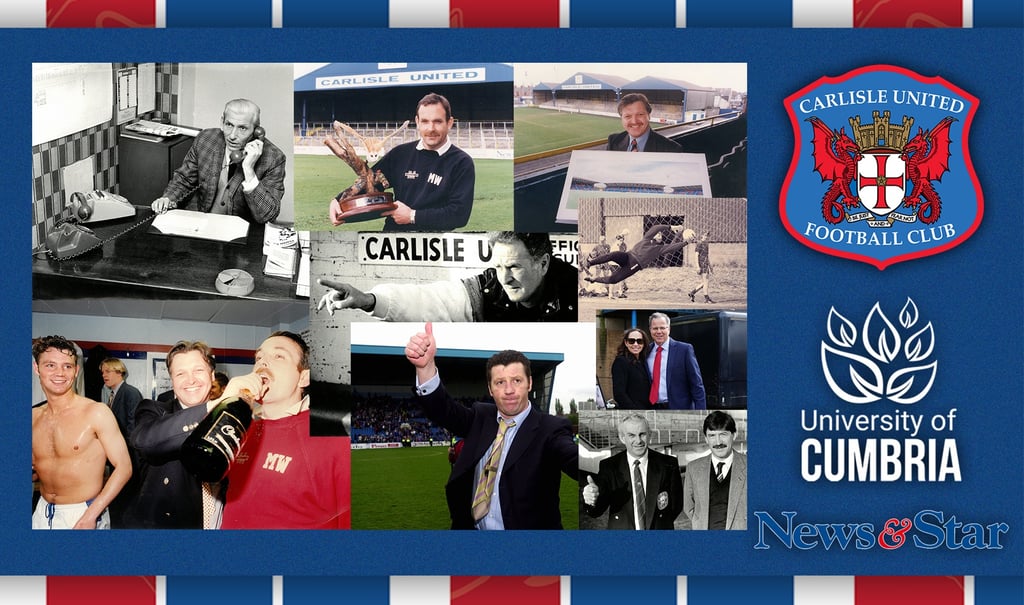
The prepared images were then brought into After Effects, where parallax camera moves were created by offsetting foreground and background layers in 3D space (Fig. 6). The intention was to introduce depth and motion while maintaining a restrained, formal tone appropriate to a commemorative setting. Alongside this, I designed a unified background using Carlisle United’s club colours and badge, providing visual continuity across the sequence.
One of the main challenges with this project was timing. We were dependent on confirmation of which managers and owners would be attending the ceremony, as this directly affected which images needed to be prioritised and included. This uncertainty meant that parts of the workflow had to remain flexible until quite late in the process, making the final stages feel increasingly time-sensitive.
As the deadline approached, it became clear that extra support was needed to ensure everything came together on time. Our tutor, Dave Roberts, stepped in during the final stages to help complete the last few parallax sequences, which made a significant difference as time was moving quickly. This moment reinforced how professional practice often relies on shared responsibility and knowing when to ask for help rather than working in isolation.
The Film and TV students then edited the completed parallax clips together into a single video for the Carlisle United Lounge, pacing it for a live event environment rather than a traditional screen-based audience (Fig. 7). Despite the uncertainty and pressure, the project was completed with a day to spare and screened as part of the plaque unveiling ceremony.
What I found most valuable about this experience was how closely it mirrored real-world creative collaboration. The process was not linear; the brief evolved, and success depended on adaptability, communication, and trust across disciplines. Rather than focusing on individual ownership, the project required everyone involved to prioritise delivery and purpose.
MDIA5007 Learning Outcome Mapping (Summary)
LO1 – Professional skills and attributes:
This project required applying animation and motion graphics skills in a real, public-facing context, prioritising reliability, clarity, and respect for the source material over stylistic experimentation.LO2 – Industry context and employability:
Working with a heritage organisation and across disciplines, a portfolio-style creative practice reflected a heritage organisation and across disciplines, a portfolio-style creative practice reflected the importance of adaptability, flexibility, and working to evolving briefs.LO3 – Collaboration and teamwork:
The project highlighted collaborative decision-making, shared responsibility, and the value of support and communication under time pressure.LO4 – Cultural and professional context:
Producing work for a commemorative setting reinforced the need to respond sensitively to audience, purpose, and cultural context.
Next steps
This project has encouraged me to place greater emphasis on collaborative and applied work within my portfolio, particularly projects that demonstrate responsibility, flexibility, and real-world impact. It has also highlighted heritage and archival media as an area where my animation and motion graphics skills can be meaningfully applied, something I’m keen to explore further.
The project was developed in collaboration with the Carlisle United Heritage Group.
References
Archival photographs reproduced with permission, courtesy of News & Star / Newsquest Carlisle. All other images and photography by the author.

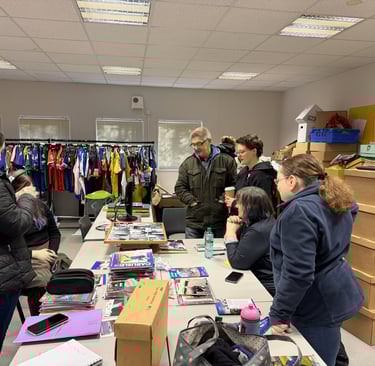
Fig. 2. Carlisle United Heritage Group previous head quarters
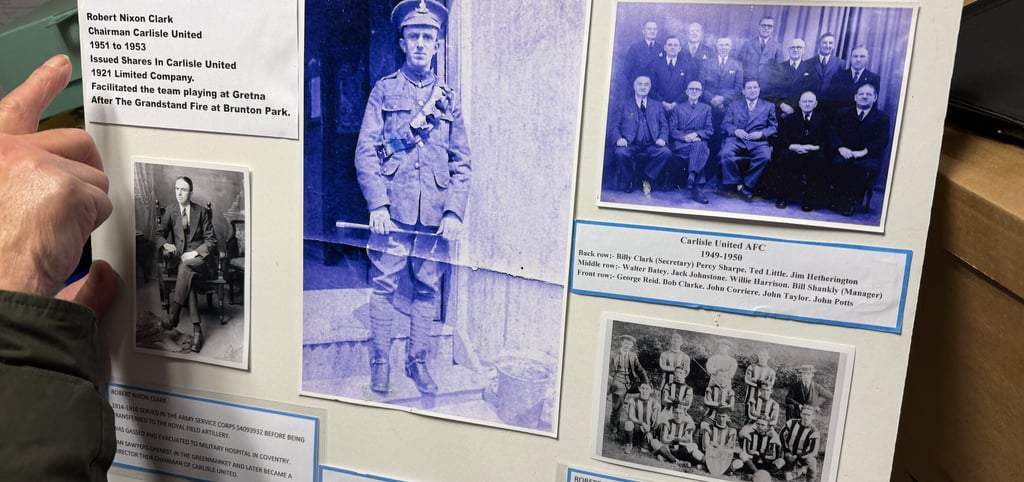

Fig. 4. Carlisle United Heritage Group. Robert Nixon Clark - Chairman Carlisle United 1951 to 1953
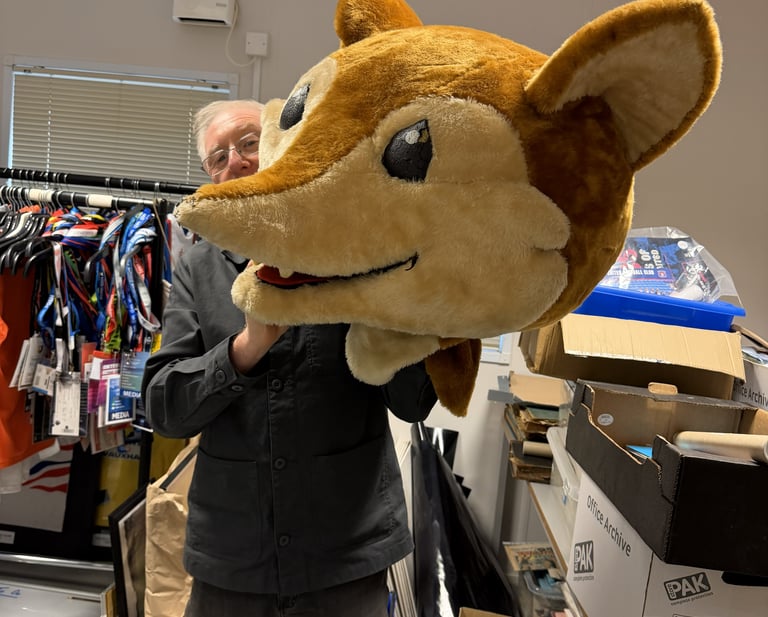
Fig. 3. Carlisle United Club Maskot Olga the Fox, head gear
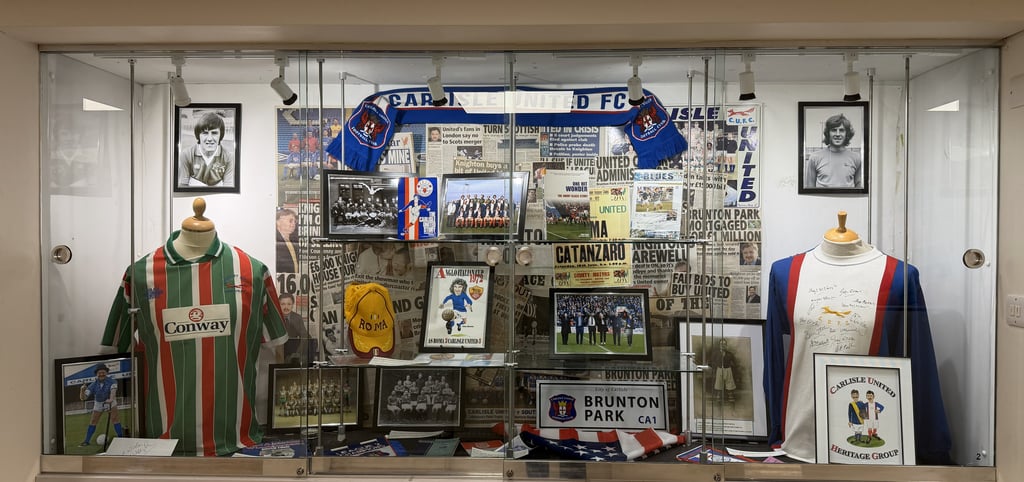
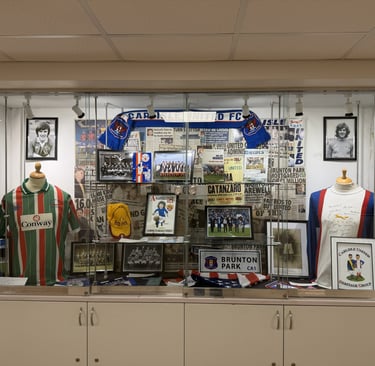
Fig. 5. Carlisle United Heritage Group. Display of CUFC memorabelia
Fig. 6. CUFC Coach Dick Young. Parallax image created by Drew Campbell in Adobe After Effects (image courtesy of *News & Star / Newsquest, Carlisle).
Fig. 7. Final video edited together by Calum Turner - Film and TV (images courtesy of *News & Star / Newsquest, Carlisle).
Fig. 1. Carlisle United Video background created by Drew Campbell. Photos courtesy of New & Star (image courtesy of *News & Star / Newsquest, Carlisle).
Business address: Voice of Drew, Carlisle, CA2 6ER | UTR: 7259771174 Copyright Drew Campbell 2024