
Why Stop Motion?
Childhood Influence, Craft, and Choosing a Physical Process
SHOT TO SCREEN
Drew Campbell
1/12/20264 min read
Why Stop Motion?
Childhood Influence, Craft, and Choosing a Physical Process
My decision to work in stop-motion for Shot to Screen is rooted less in novelty and more in a long-standing fascination with how physical materials can be brought to life frame by frame. Some of my earliest memories of animation come from watching repeated television broadcasts and cinema screenings of fantasy films such as The 7th Voyage of Sinbad (1958), Jason and the Argonauts (1963) and Clash of the Titans (1981). What struck me even as a child was not simply the spectacle of monsters and mythological creatures, but the fact that they felt present; they occupied the same physical space as the actors.
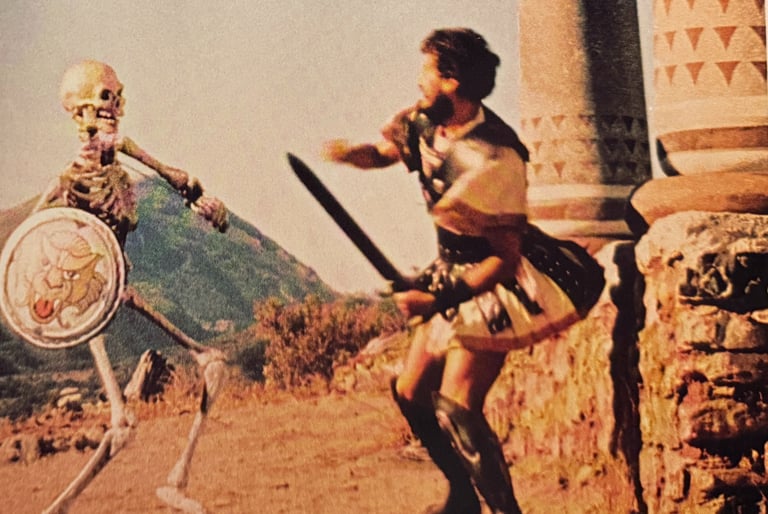
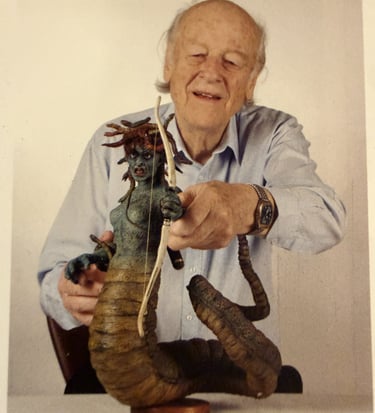
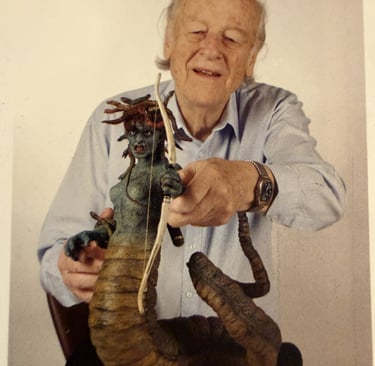
Ray Harryhausen’s stop-motion creatures had a weight and tactility that stayed with me. The famous sequence in Jason and the Argonauts, where a skeletal army rises from the ground to battle a live-action hero, remains one of the most powerful examples of animation integrated into live action. It is often cited as a formative influence on later British animators, including Peter Lord and Dave Sproxton, who went on to found Aardman Animations (Lord and Sibley, 2004).
Alongside these cinematic experiences were children’s television programmes that introduced me to animation in a more playful, everyday context. Shows such as The Magic Roundabout and Vision On presented animation not as something distant or epic, but as something intimate and handmade. Vision On, in particular, played a key role in the early development of Lord and Sproxton, who began contributing short animated sequences to the programme while still students. Their work drew inspiration from both Harryhausen’s fantasy films and the surreal visual humour of Terry Gilliam’s animations for Monty Python’s Flying Circus (Lord and Sibley, 2004).
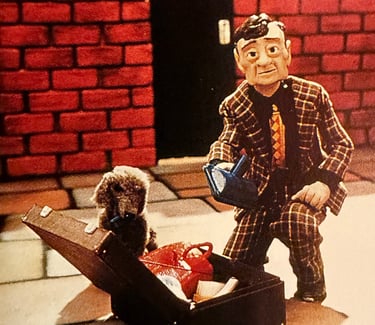
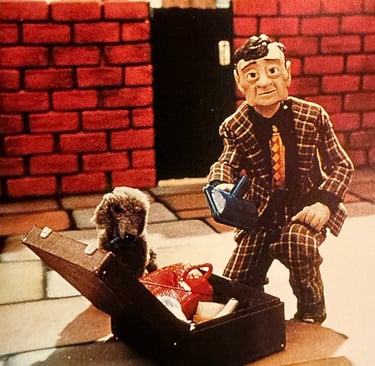
What I find especially compelling about this period is how deliberate the creative choices were. Lord and Sproxton eventually committed to clay animation not because it was fashionable, but because it offered expressive freedom and stood apart from other animation being produced in Britain at the time. Clay allowed for transformation, exaggeration, and improvisation in ways that traditional puppets could not. Early Vision On sequences featured everyday settings, plates, tables, household objects, combined with animated clay forms that shifted and merged in unexpected ways, blurring the boundary between the real and the animated (Lord and Sibley, 2004).
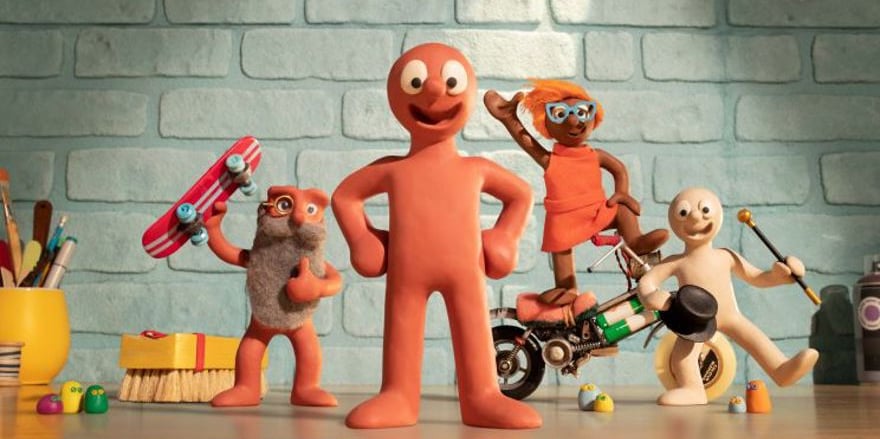
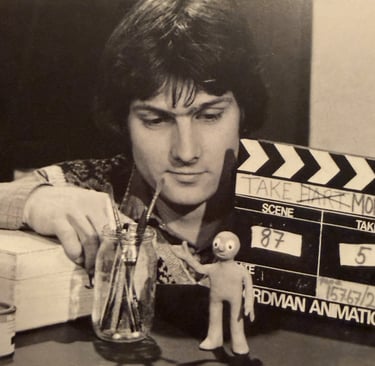
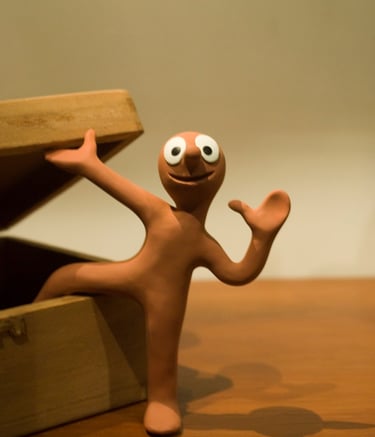
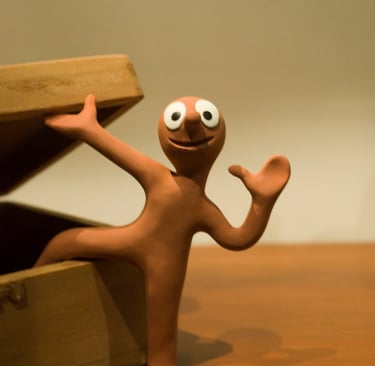
This philosophy of simplicity and character-led design became even clearer with the creation of Morph. The character’s appeal lay in his minimal form, the warmth of his colour, and the ease with which he could transform into other shapes. Audiences connected to this directness, and Morph went on to become a central figure in British animation culture, appearing across multiple programmes and series. For me, this reinforces the idea that strong animation does not rely on the complexity of tools but on the clarity of intent and performance.
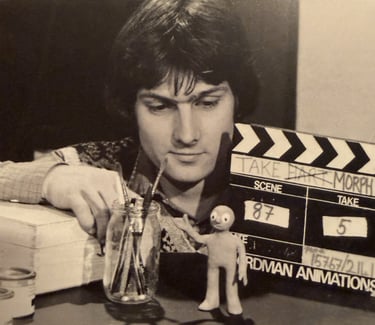
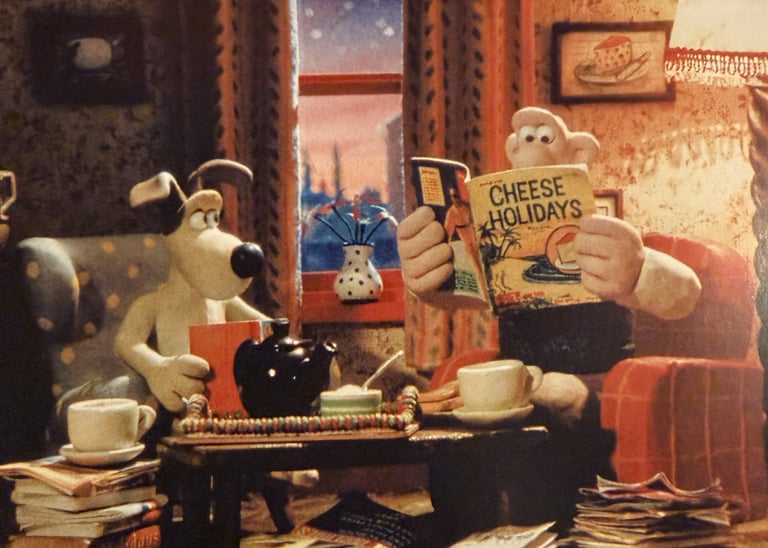
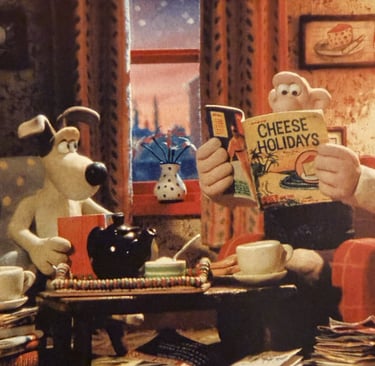
Aardman’s later work, including Animated Conversations and A Grand Day Out, further cemented my appreciation for stop-motion as a storytelling medium. A Grand Day Out introduced Wallace and Gromit through a story that was playful, character-driven and grounded in physical comedy. Despite its modest premise, the film demonstrated how carefully crafted movement, timing and set design could carry narrative and humour without spectacle for its own sake (Lord and Sibley, 2004).
Reflecting on these influences has helped clarify why stop-motion feels like the right approach for my Shot to Screen project. The module encourages adaptation, craft and conscious production decision-making, and stop-motion naturally foregrounds these values. Every movement must be considered, every set built with intention, and every action planned in relation to the camera. This aligns closely with my interest in process-led making and tactile world-building.
Choosing stop-motion is therefore not just an aesthetic preference, but a way of engaging directly with animation as a physical craft. It allows me to slow down, think through performance and composition, and embrace imperfections as part of the work's character. Moving forward, I aim to draw on these historical influences while developing a contemporary piece that reflects my own sensibilities, scale and storytelling priorities.
Next steps will involve translating this inspiration into practical decisions, refining my set design, testing materials, and exploring how limited movement and framing can be used effectively in the short format required for the module.
References
Lord, P. and Sibley, B. (2004) Cracking Animation. New Edition. London: Thames & Hudson, pp. 48, 53–56.
Harryhausen, R. and Dalton, T. (2008). A Century of Stop Motion Animation. Watson-Guptill Publications, pp.19, 226, 229. Fig. 3, Fig. 5, Fig. 6.
Fig. 2. Skeleton battle Jason and the Argonauts
Fig. 1. Morph and Friends
Fig. 4. Sales Pitch. Conversation Pieces, series
Fig. 3. Ray Harryhausen manipulating Madusa
Fig. 5. David Sproxton with Morph. Take Hart cica 1980
Fig. 7. Morph. Take Hart circa 1980
Fig. 6. Wallace and Gromit A Grand Day Out
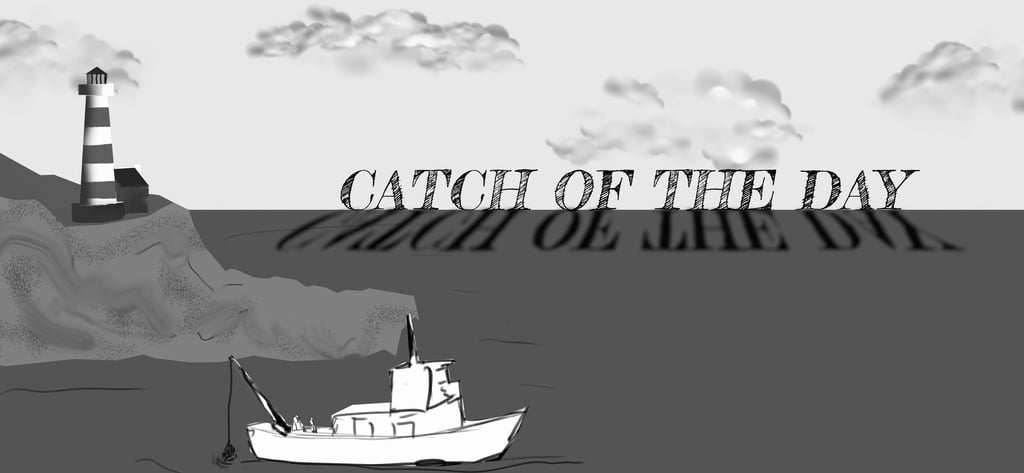
Fig. 8. Catch of the Day, first frame
Business address: Voice of Drew, Carlisle, CA2 6ER | UTR: 7259771174 Copyright Drew Campbell 2024