Story Beats and Three-Act Structure
Structuring The Bracelet
SCRIPT, STORYBOARD AND PREVIS
Drew Campbell
10/29/20253 min read
Structuring The Bracelet
What is a Beat Sheet?
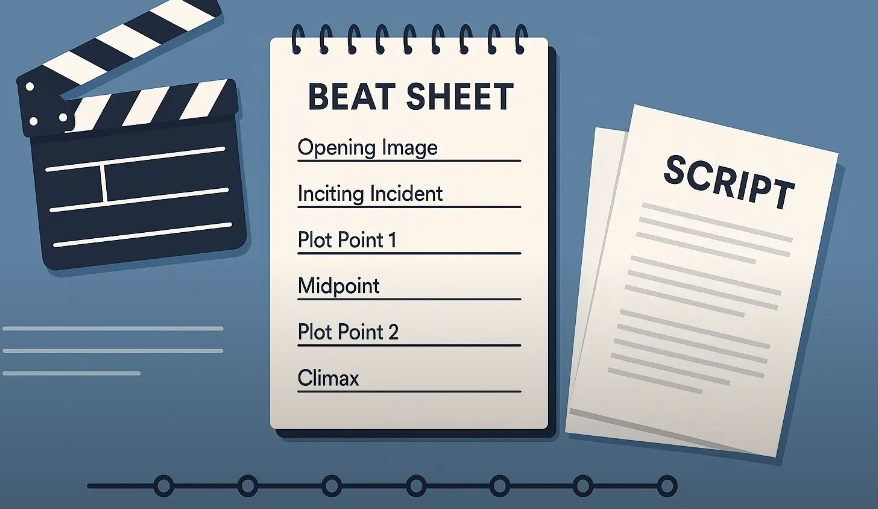
A beat sheet is a screenwriting tool that maps out a story’s key plot points and emotional shifts in a concise, bulleted structure. Rather than dealing in full scenes or dialogue, it breaks a narrative down into clear “beats” — moments where something changes, information is revealed, or the direction of the story shifts.
Functionally, it serves as a structural blueprint for a film or television script, laying out significant events in chronological order without bogging down in prose. This makes it especially useful in early development, where the focus is on story logic, pacing, and emotional progression rather than polished writing.
In animation and previs, a beat sheet also serves as a bridge between narrative and visual planning. Because each beat represents a change in story energy, it provides a clear framework for thinking about shot progression, visual emphasis, and where moments of impact or pause should sit before moving into scripting, storyboarding, or animatic work.
This session focused on story beats and three-act structure, using Save the Cat! Fig.2. As a practical framework for shaping short film narratives. Rather than treating structure as something that supports a finished script, the emphasis was firmly on developing the story before any dialogue is written. That shift in thinking felt particularly important for animation and previs, where clarity of narrative and visual intent needs to be locked down early.
A key takeaway was the reminder that a ten-minute film equates to roughly ten pages of script. With such a limited runtime, every moment has to contribute to story progression. This is where story beats became applicable, not as rigid rules, but as “mini chapter breaks” that help propel the narrative forward and prevent scenes from feeling static or indulgent.
During the session, I applied this directly to my own story, The Bracelet. Working through the beat sheet live in class, I managed to create a complete first draft in around twenty minutes. That speed was revealing. Instead of overthinking individual scenes, the beat sheet forced me to focus on the function of each moment, what changes, what information is revealed, and how the emotional stakes shift.

Fig.2
Fig.1
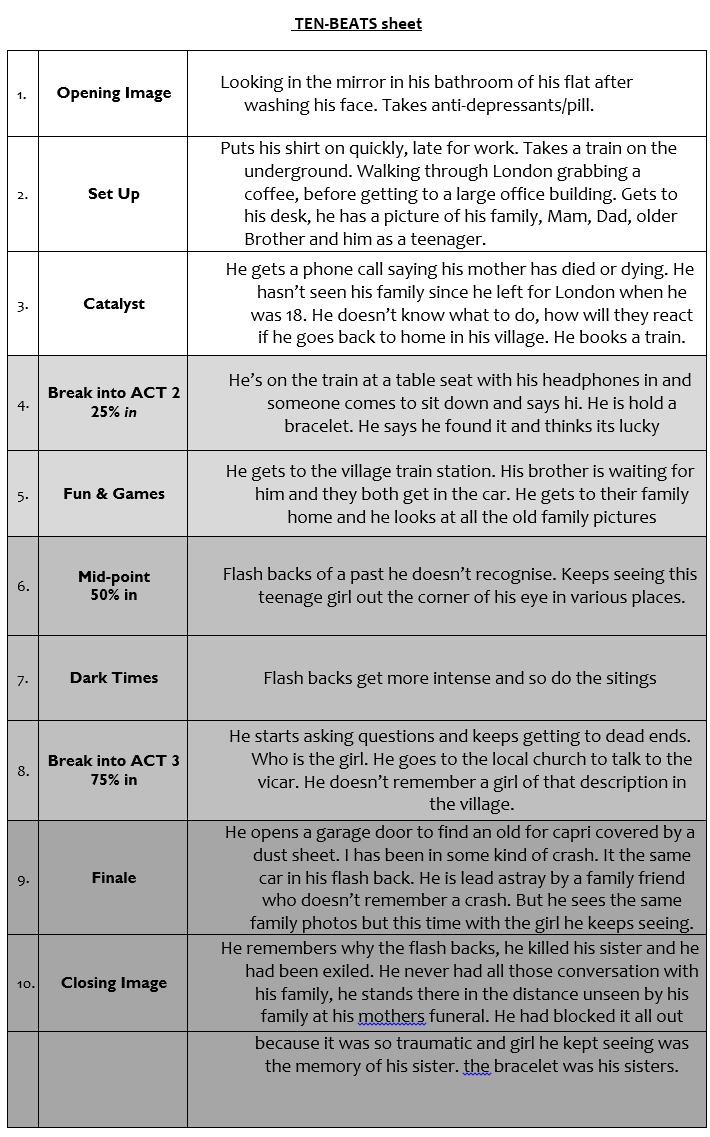
Fig.3
Using the Save the Cat structure helped me clearly identify the opening image and everyday world, followed by the catalyst that disrupts it. Act Two became a space to explore complication and escalation, with the midpoint acting as a false sense of resolution before things unravel. Framing the midpoint as either a false victory or a defeat was especially helpful for The Bracelet, as it clarified where the story's emotional turning point actually sits. From there, the “dark times” beat naturally emerged, leading into a more purposeful Act Three resolution. Fig.3
What stood out most was how much clarity the beat sheet gave me before writing a single line of script, and having the entire story laid out structurally made it easier to see where the narrative was strong and where it might need refining. It also highlighted which beats will need to be communicated visually rather than through dialogue, something that will be critical once I move into storyboarding and animatic development.
My next step is to revisit this first beat sheet draft and stress-test it: questioning whether each beat genuinely advances the story and whether it can be expressed through action, framing, and pacing. Once that structure feels solid, I can move into scripting and storyboarding with far more confidence that I’m building on a strong narrative foundation rather than discovering the story too late in the process.
Refrences
Fig.1: Beat Sheet. (2025). [Online Image] prescene.ai. Available at: https://www.prescene.ai/blog/the-beat-sheet [Accessed 20 Dec. 2025].
Fig.2: Hellerman, J. (2024). [Online Image] no film school. Available at: https://nofilmschool.com/save-the-cat-beat-sheet [Accessed 20 Dec. 2025].
Fig.3: Campbell, A. (2024). [Word Doc] The Bracelet Beat Sheet.
Business address: Voice of Drew, Carlisle, CA2 6ER | UTR: 7259771174 Copyright Drew Campbell 2024