Stop4Media × VoiceFinder
Translating a Vague Brief into Professional Animation
PROFESSIONAL DEVELOPEMENT
Drew Campbell
12/9/20255 min read


Stop4Media - VoiceFinder:
From Vague Brief to Professional Delivery
This collaboration between Stop4Media and VoiceFinder became one of my most instructive experiences of animation as a professional service. Not because it was smooth or perfectly scoped, but because it required negotiation, compromise, and clear-eyed decision-making that went well beyond a student mindset.
Starting with a vague idea
The initial brief was intentionally loose: “waking up VoiceFinder,” a platform that had lain dormant for some time. There was also an early suggestion of a fairy-tale tone — waking a character, rather than simply explaining a service. At this stage, there was no script and no fixed structure, only a feeling and a metaphor.
My first step was to externalise that idea through a rough storyboard. At this point the project was conceived as three short animations, each acting as a narrative beat. This early visual planning wasn’t about polish; it was about giving shape to something abstract so it could be discussed and refined collaboratively.
When the voiceover arrived
Once Lizzie Jobling recorded and sent over the voiceover, the project suddenly became much clearer. The pacing, intention, and tone of the message revealed a natural three-part structure, so I split the audio into sections and committed to producing the animations as individual pieces.
This moment was a useful professional reminder: clarity doesn’t always arrive at the start, and workflows need to remain flexible enough to absorb it when it does.
Video one: Dormancy
For the first animation, I fully committed to the metaphor. I created a character directly from the VoiceFinder logo and placed him asleep in bed, representing the platform lying dormant. Alongside this, I introduced a ringing dial telephone — a visual shorthand for missed calls and missed opportunities.
I paired this with soft, fairy-tale-style music to reinforce the idea of something waiting to be awakened rather than something broken. Lizzie’s response to this first piece was extremely positive, which confirmed that the narrative framing was landing as intended.
Video two: holding back
The second animation deliberately retained the same music and visual tone, with VoiceFinder still asleep. Rather than escalating too quickly, this repetition allowed the sense of dormancy to settle and created contrast for what followed. Professionally, this was about trusting structure and restraint rather than constantly feeling the need to add spectacle.
Video three: the wake-up
The final animation marked a complete tonal shift. VoiceFinder wakes with a smile, jumps out of bed, and the fairy-tale music gives way to something energetic and funky. The bedroom disappears and becomes a disco — lights, dancers, movement — carrying through right to the final frame.
At this stage, Lizzie herself was introduced as a character. This wasn’t part of the original plan, but it emerged naturally once the voiceover clarified the story. It felt like an escalation that served the message rather than a novelty.
Budget reality and creative compromise
A crucial part of this project — and one that feels especially relevant to Professional Development — was the budget. My original quote, although modest by animation standards, was still too high for Lizzie to consider. I had to make a decision: walk away, or adapt.
I chose to adapt.
To keep the project viable, I did not hand-draw any of the artwork. Instead, I generated visual assets using prompts on Freepik, then brought them into Adobe Photoshop to splice them into layers. These layered elements were then animated in Adobe After Effects.
While this was a compromise in terms of authorship of illustration, it was not a shortcut in labour. Even working at a reduced, budget-friendly rate, the project took around 2.5 months to complete. However, it allowed me to deliver professionally, build a real client relationship, and crucially, gain a strong portfolio piece. As someone starting with paid animation work, that trade-off felt justified.
Combining the animations
After seeing all three pieces, Lizzie asked if they could be combined into a single continuous animation. This wasn’t straightforward in terms of pacing and transitions, but problem-solving is part of professional delivery. The challenge was to merge them without losing the internal logic of each section, something that required careful restructuring rather than simply stitching them together.
Client feedback
The most affirming moment came afterwards, when Lizzie shared the following testimonial:
“I recently commissioned Drew to animate a series of three animations for a company I’ve purchased.
To say that I am beyond pleased is a huge understatement. Drew exceeded every expectation and more. He worked tirelessly to meet my tight deadlines, he was communicative, collaborative and exceptionally creative.
The final productions are quite literally epic. He took my very rough idea and chiselled it into a finely tuned masterpiece.
I will be returning to Drew for all my animation requirements and will be recommending him far and wide.
5 stars doesn’t do this service justice.”*
Reflection
This project taught me that professional animation is rarely about ideal conditions. It’s about translating vague ideas into workable visuals, balancing creativity with clarity, and making pragmatic decisions around time and budget. Most importantly, it challenged my student perfectionism. “Good enough and on time” isn’t settling; it’s often exactly what professionalism looks like. This experience aligns with broader discussions of professional craft as a balance between ideal standards and real-world constraints (Sennett, 2008).
As I continue to develop Stop4Media alongside my studies, experiences like this help me reframe how I value my work, scope projects realistically, and understand animation not just as a craft but as a service grounded in trust, communication, and delivery.
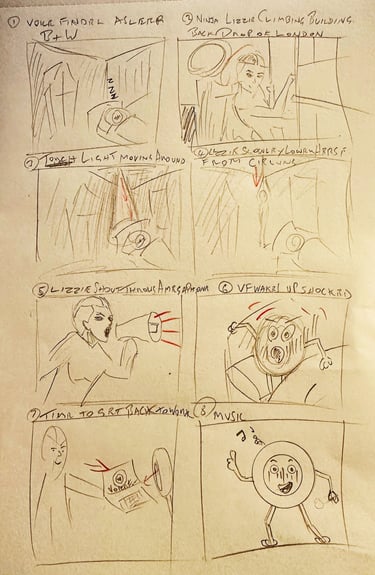
Fig. 2. Rough draft of the storyboard
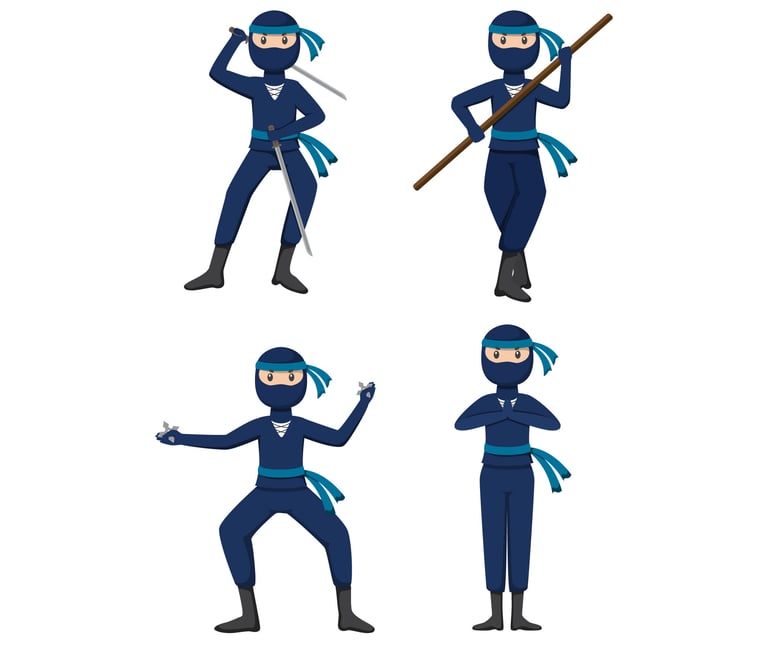
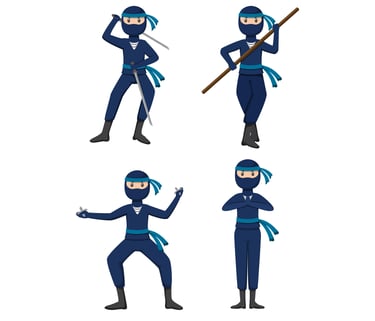
Fig. 3. Ninja idea (FreePik, 2025)
Fig. 1. Still from the final animation
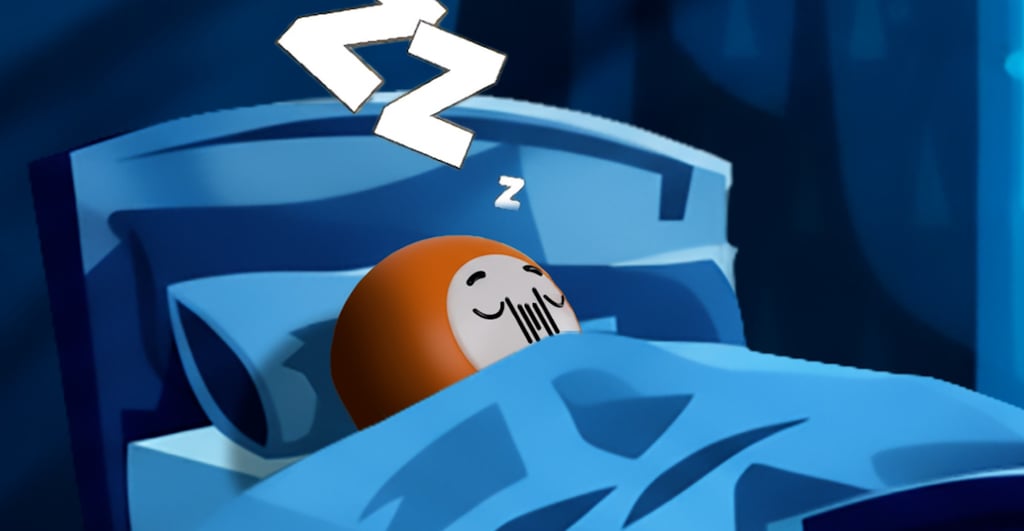
Fig. 4.Still from the first animation. VoiceFionder in bed sleeping
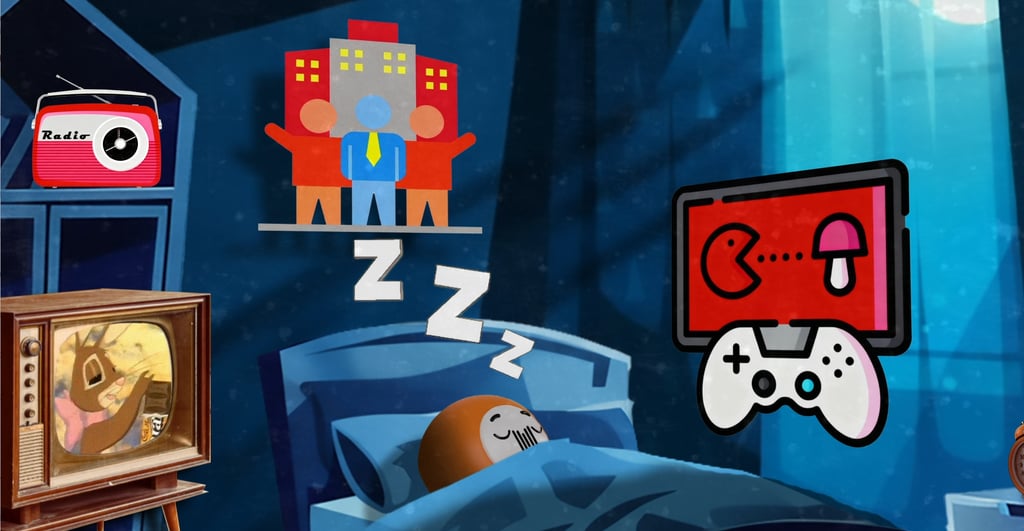

Fig. 5. Still from the second animation. Depicting genres of voiceover


Fig. 6. Still from the third animation. Depicting VoiceFinder fully awak and dancing.

Fig. 8. The final VoiceFinder animation
References
Adobe (2025) Adobe After Effects. Available at: https://www.adobe.com/uk/products/aftereffects.html (Accessed: 1 January 2026).
Adobe (2025) Adobe Photoshop. Available at: https://www.adobe.com/uk/products/photoshop.html (Accessed: 1 January 2026).
Freepik (2025) Freepik: Stock Images, Vectors and AI-Generated Assets. Available at: https://www.freepik.com (Accessed: 1 January 2026).
Sennett, R. (2008) The craftsman. 1st ed. New Haven: Yale University Press.
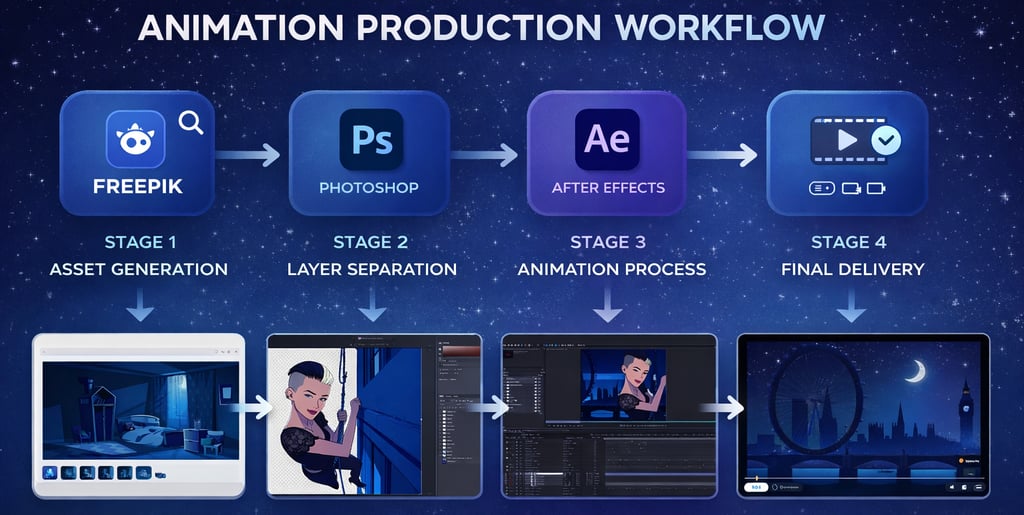
Fig.7. Example of my animation work flow for this project
AI Use Statement
Generative AI tools were used to support the structuring, editing, and clarity of this reflective writing. All ideas, critical analysis, and personal reflections are my own.
Business address: Voice of Drew, Carlisle, CA2 6ER | UTR: 7259771174 Copyright Drew Campbell 2024