Reflecting on Professional Development
(MDIA5007)
PROFESSIONAL DEVELOPEMENT
Drew Campbell
1/1/20264 min read

Reflecting on Professional Development (MDIA5007)
When I started Professional Development, I knew I was coming to the module from a different place than many of the younger students. At 57, I have decades of experience in several job sectors and have built a freelance career as a voiceover artist. Because of this, I already understood workplace standards, deadlines, communication, self-management, and client relationships, which matched many of the topics covered in the module.
Still, I realised that experience can become a limitation if I don’t question it. I didn’t want to go into MDIA5007 thinking I already knew everything. Professional development is constantly evolving, and the creative industries are always moving forward. That’s why I made a point of taking part in the module and letting my ideas about work, identity, and career paths be challenged and refined.
One of the best parts of the module was hearing from guest speakers who brought real industry experience to the theory we learned. Craig Charters’s session was especially memorable for its honesty and clarity. He openly shared how he runs his business, manages his work and clients, and approaches sustainability, which felt generous in a field that often keeps information private. This showed me that openness, adaptability, and clear communication are critical professional skills, not just creative ones.
Maria Caruana Galizia, founder and head producer at Candle and Bell, was profoundly inspirational. Her journey highlighted the realities of building a creative business against structural and personal challenges, and her success reframed what felt achievable for me professionally. Hearing her speak directly influenced how I view my own enterprise, Stop4Media, not as an unrealistic ambition, but as a viable, long-term professional pathway grounded in persistence, adaptability, professional identity and belief in one’s creative value. This emphasis on professional identity as something developed through sustained practice and reflection aligns with Sennett’s view of craftsmanship as an ongoing commitment to doing work well, rather than a fixed job role (Sennett, 2008).
Tom Speight’s contribution also added valuable insight, particularly around professional standards, storytelling, and accountability within larger organisational structures. Together, the guest speakers provided a nuanced picture of the creative industries — one that balanced ambition with realism, and helped situate my own skills within a broader professional landscape.
The teaching team played a significant role in shaping the reflective nature of this module. Laura Baxter’s supportive approach encouraged honest self-evaluation rather than surface-level reflection. This was particularly important in a module that asks students to examine not just what they can do, but how they operate professionally. Ed Cooper’s sessions were also a highlight, especially the collaboration with the Carlisle United Heritage Group. Contributing animation skills to a real community-facing project reinforced the idea that employability is not only about securing work, but about understanding impact, collaboration, and responsibility within a wider cultural context.
Bethany McGrath’s talks were particularly eye-opening. Despite my age and prior experience, I realised how much I was unaware of in terms of institutional support, from self-employment guidance and volunteering routes to opportunities such as the Turing Scheme. This challenged the assumption that career support is primarily aimed at younger students, and instead highlighted professional development as a lifelong process.
The teaching team played a significant role in shaping the reflective nature of this module. Laura Baxter’s supportive approach encouraged honest self-evaluation rather than surface-level reflection. This was particularly important in a module that asks students to examine not just what they can do, but how they operate professionally. Ed Cooper’s sessions were also a highlight, especially the collaboration with the Carlisle United Heritage Group. Contributing animation skills to a real community-facing project reinforced the idea that employability is not only about securing work, but about understanding impact, collaboration, and responsibility within a wider cultural context.
Bethany McGrath’s talks were particularly eye-opening. Despite my age and prior experience, I realised how much I was unaware of regarding institutional support, from self-employment guidance and volunteering routes to opportunities such as the Turing Scheme. This challenged the assumption that career support is primarily aimed at younger students, and instead highlighted professional development as a lifelong process.
Looking Ahead
As I move forward into my final year and beyond university, the lessons from this module will directly inform how I position myself within the creative industries. I feel more confident in framing my work, skills, and values as part of a coherent professional identity rather than a collection of disconnected roles. MDIA5007 has not provided definitive answers, but it has sharpened my awareness of the questions I need to keep asking, about sustainability, direction, and purpose, as I continue to develop both as a creative practitioner and as a professional.
Reference
BBC (2023). BBC - Home. [online] BBC Homepage. Available at: https://www.bbc.co.uk/ [Accessed 1 Jan. 2026].
Candle and Bell (2023). Candle & Bell. [online] Candle & Bell. Available at: https://candleandbell.com/.Charters, C. (2020) [Accessed 1 Jan. 2026].
CRAIG CHARTERS. [online] CRAIG CHARTERS. Available at: https://craigcharters.com/ [Accessed 1 Jan. 2026].
Cumbria Arts & Culture Network (2025). Home - CACN. [online] CACN. Available at: https://cacn.co.uk/ [Accessed 1 Jan. 2026].Sennett, R. (2008). The Craftsman. London: Penguin.
AI Use Statement
Generative AI tools were used to support the structuring, editing, and clarity of this reflective writing. All ideas, critical analysis, and personal reflections are my own.
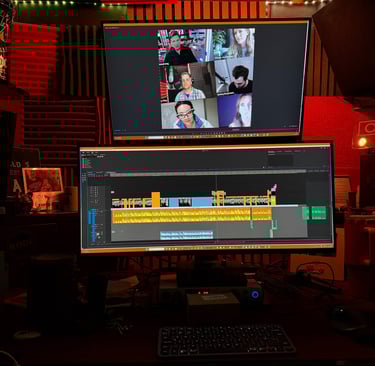
Fig. 1. My studio workspace
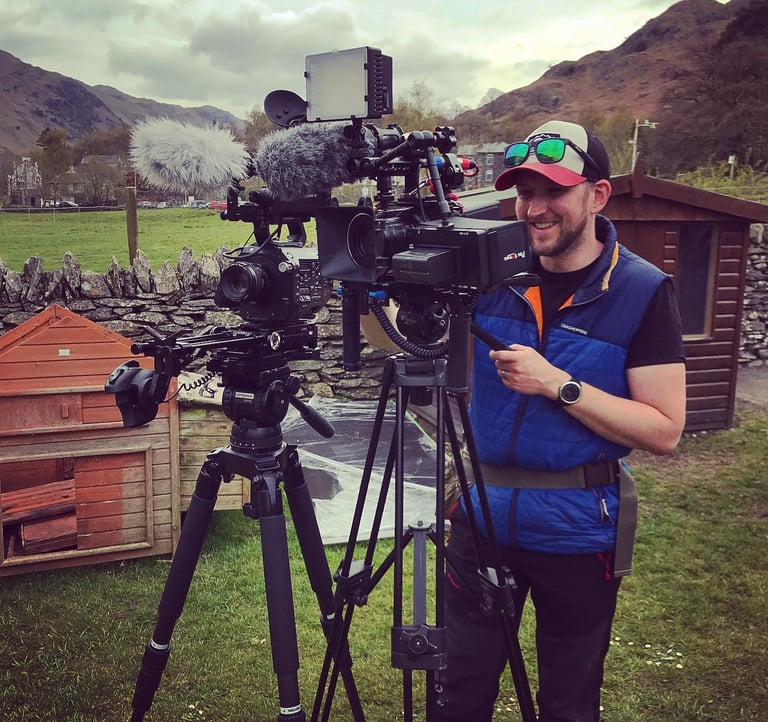
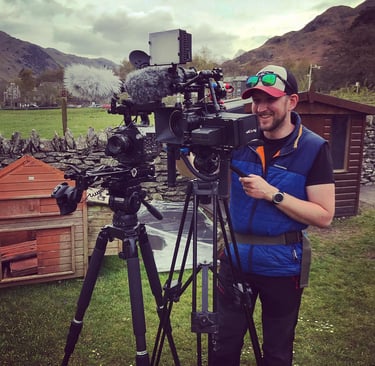


Fig. 2. Craig Charters at work. (Charters, 2025)
Fig. 3. Maria Caruana Galizi with an RTS Award. (Galizi, 2025)
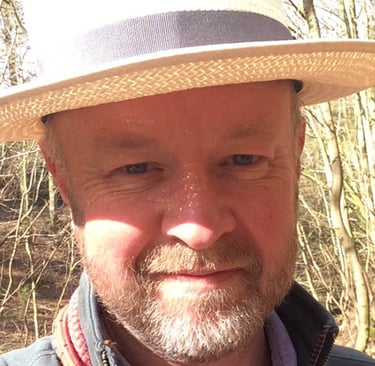


Fig. 4. Tom Speight. (CACN, 2025)
Fig. 5. BBC logo. (BBC, 2025)
Business address: Voice of Drew, Carlisle, CA2 6ER | UTR: 7259771174 Copyright Drew Campbell 2024