
Refining the Story:
Irony, Memory, and Narrative Clarity
SCRIPT, STORYBOARD AND PREVIS
Drew Campbell
11/12/20254 min read
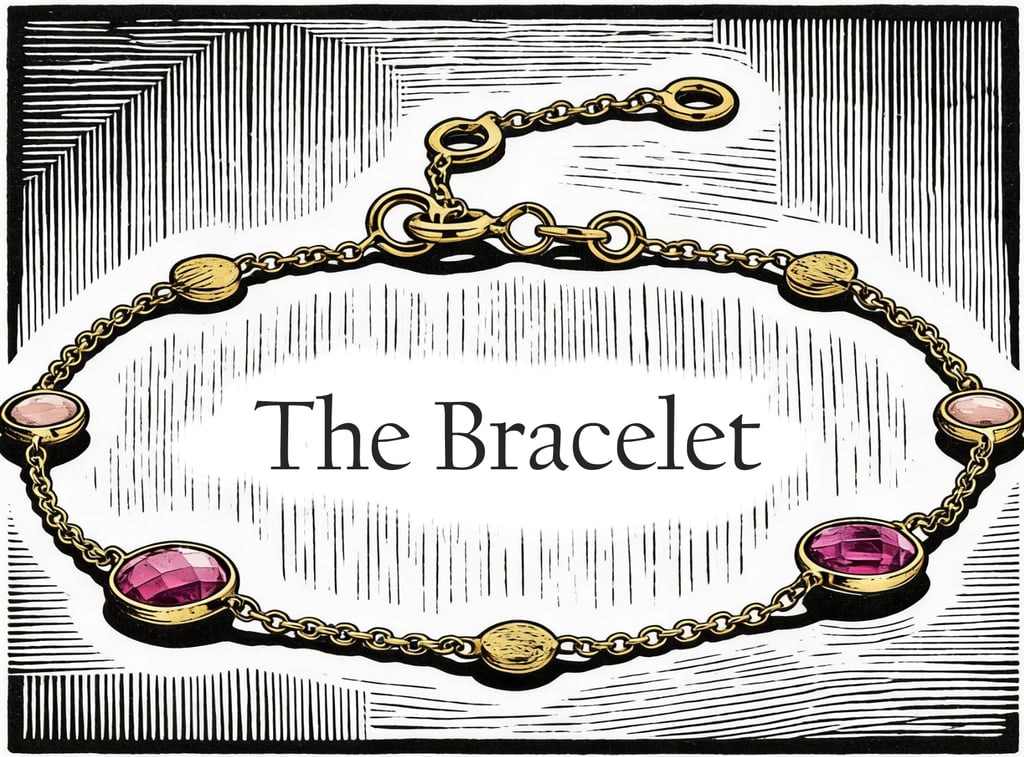
Refining the Story: Irony, Memory, and Narrative Clarity
At this stage, I made a conscious decision to refine the story's psychological logic rather than continue developing it in its earlier form. Initially, the narrative leaned toward a more overt mystery in which the wider community appeared to deny Emma’s existence entirely. However, reflecting on the lecture content and my own thematic intentions, I realised this approach risked shifting the story away from trauma and toward a conspiracy or puzzle narrative.
The lecture emphasised that irony is most effective when it is embedded within character and situation, rather than applied as a surface-level twist (University of Cumbria, 2025). Reframing the story so that Emma’s erasure exists primarily within James, while the family avoid speaking about her, allowed the irony to emerge naturally. James now works in risk assessment for an insurance firm, building his adult life around responsibility, prevention, and accountability, yet remains unable to confront the single moment when responsibility truly mattered.
This shift also clarified the story’s emotional focus. Rather than positioning James as a passive victim of collective deception, he becomes an active participant in his own psychological avoidance. The narrative no longer asks “Why are they lying?” but instead “What has James done to survive?”, a question that aligns more closely with the themes of guilt, repression, and British emotional restraint that underpin the project.
Story Structure, Causality, and the Role of Irony
Another key takeaway from the lecture was the importance of causal storytelling, in which each narrative beat leads logically to the next. The “but / therefore” principle discussed in the session reinforced the idea that stories lose momentum when events simply follow one another without consequence (University of Cumbria, 2025). Applying this to The Bracelet helped me identify moments when James’s investigation needed to destabilise him rather than reveal information.
The lecture also highlighted the distinction between inner and outer conflict, stressing that strong stories often resolve both by the end of the film (University of Cumbria, 2025). In this case, the outer conflict remains understated —a family shaped by silence—while the inner conflict drives the story forward. James’s emotional journey becomes the primary engine of change, culminating not in absolution but in acceptance.
For example, each attempt to reconnect with Emma’s memory now produces emotional resistance or fragmentation. James searches for reassurance, but finds absence. He seeks clarity, but his perception becomes less stable. This approach ensures that the narrative progresses through pressure and consequence rather than coincidence.
Theme, Restraint, and Narrative Focus
Identifying a clear theme was another point repeatedly emphasised during the lecture, particularly to prevent stories from wandering or becoming unfocused (University of Cumbria, 2025). Clarifying the theme of The Bracelet as one of suppressed responsibility and delayed grief helped guide decisions about what to include — and what to remove.
Rather than escalating the plot through spectacle or explicit revelation, the story now relies on restraint. Silence, absence, and omission become narrative tools rather than gaps to be filled. This approach feels more emotionally honest and more consistent with the psychological thrillers that influenced the project, where trauma is revealed through fragmentation rather than exposition.
By grounding each scene in the theme, the story remains focused on James’s internal transformation: from avoidance, to destabilisation, to the brutal act of remembering. This aligns with the lecture’s assertion that character change — emotional, psychological, or moral — forms the spine of a compelling narrative (University of Cumbria, 2025).
Reflection on Development and Learning
Although the core premise of The Bracelet remains intact, this stage of development has been crucial in refining how the story functions. The changes made are not corrections of mistakes, but responses to a deeper understanding of narrative psychology and structure.
Engaging with the lecture content prompted me to move away from overt mystery mechanics and toward a more grounded exploration of trauma. In doing so, the story now feels more coherent, more restrained, and more purposeful. Most importantly, James is no longer simply uncovering a truth — he is choosing whether or not to face it.
Refrences
Campbell, D. (2025) The Bracelet: Bathroom mirror concept illustration. Digital illustration.
Freepik (2025) AI image generation platform. Available at: https://www.freepik.com (Accessed: 07 November 2025).
OpenAI (2025) ChatGPT (GPT-5.2). Available at: https://chat.openai.com
(Accessed: 07 November 2025).
University of Cumbria (2025) Script, Storyboard and Previs lecture: Story structure, irony and loglines. AVFX5101, 5 November.
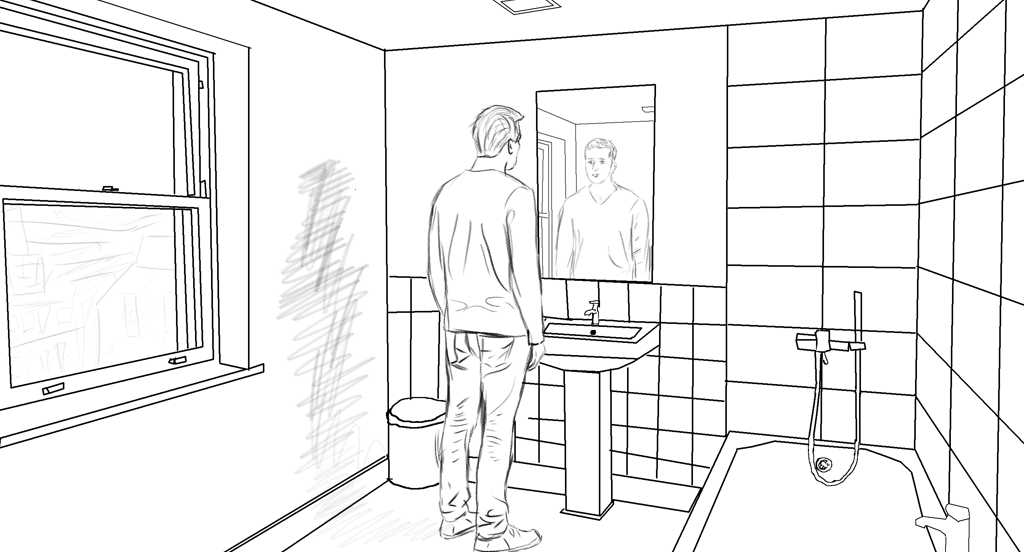
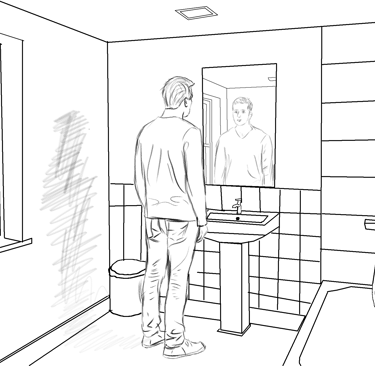
Fig.1. Early visual exploration of James’s internal conflict, using reflection and isolation to suggest fractured identity rather than external threat. (Author’s own work, 2025)
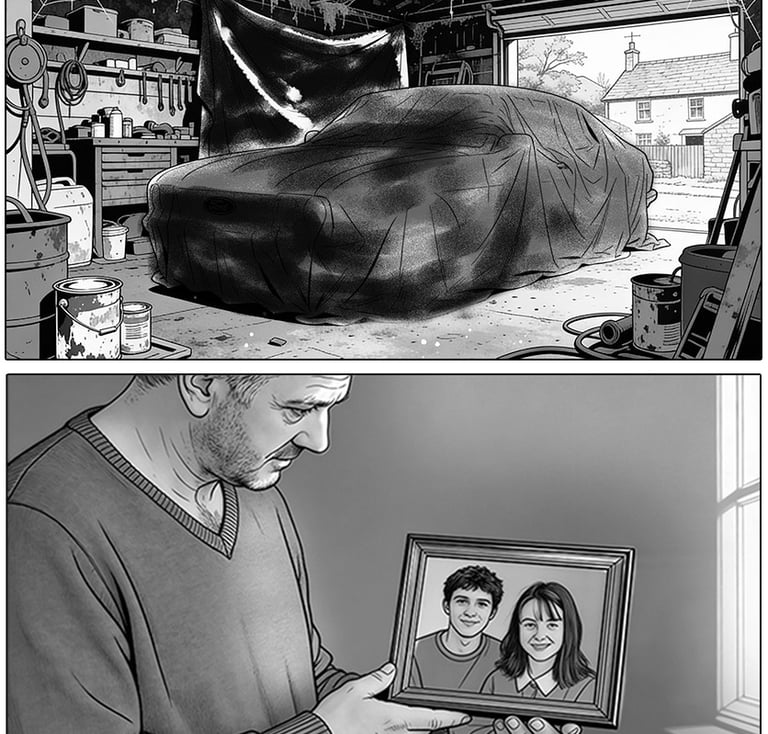
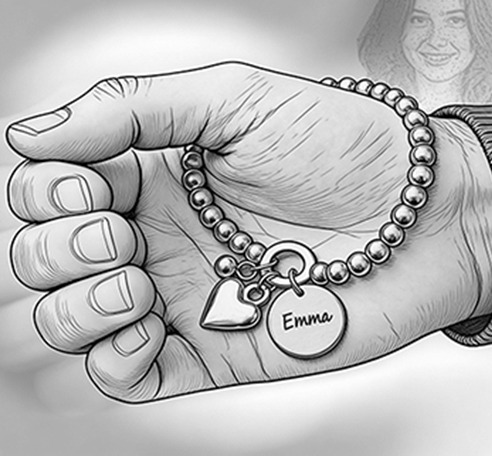
Fig.2. Selected storyboard frames focusing on key emotional beats, paired with Fig.3, the recurring bracelet motif to reinforce causality, irony, and psychological continuity. (Generated using Freepik, 2025
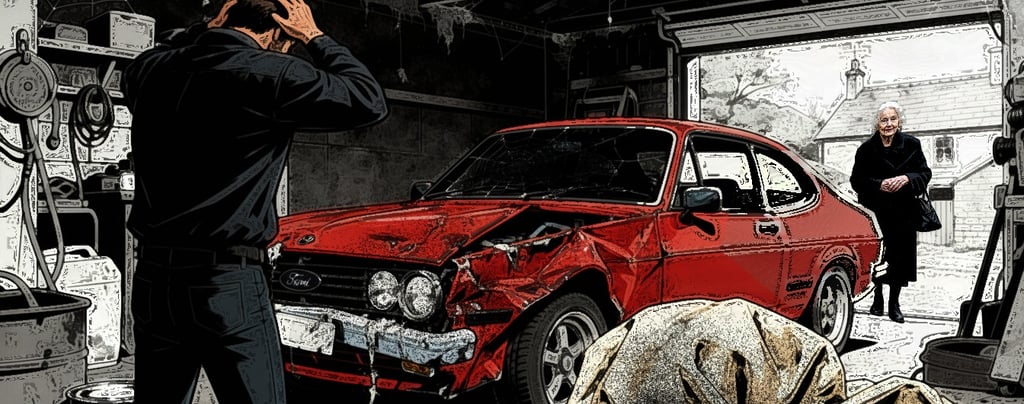

Fig.4. Visual development of James discovering the damaged car in the present day, using the object as a contained trigger for guilt rather than depicting the accident itself. (Generated using Freepik, 2025
This post was developed with the support of AI-assisted drafting tools (OpenAI, 2025), used to structure reflection and refine clarity.
Business address: Voice of Drew, Carlisle, CA2 6ER | UTR: 7259771174 Copyright Drew Campbell 2024