
Refining Character Arcs and Narrative Function
Refining character arcs and narrative function in The Bracelet
SCRIPT, STORYBOARD AND PREVIS
Drew Campbell
11/19/20254 min read


Refining Character Arcs and Narrative Function
After submitting my AVFX5101 blog and script materials, I took time to step back and reassess how my characters function within The Bracelet. Rather than revising the story itself, this reflection focuses on character arcs as a structural tool, particularly how different characters support or resist the protagonist’s journey without all requiring equal narrative weight.
One of the key ideas reinforced in lectures was that strong stories are driven by transformation, but not every character needs to transform on screen. What matters is how each character contributes to the central arc. With that in mind, I made a conscious decision to weight character depth according to narrative function rather than treating all characters equally.
James remains the emotional and psychological core of the story, and his arc is explored in the most detail. Emma’s arc operates differently. She is not a character who changes, but one who persists. Existing as fragments, reflections, and half-formed recollections, she aligns with the story’s psychological tone and functions as a representation of suppressed memory rather than an external presence. Emma embodies the truth James avoids, not just her death, but his responsibility for it.
The remaining characters are intentionally more contained. David, Thomas, Sarah, Father Patrick, and Margaret Doyle each represent a different response to shared trauma, including endurance, emotional suppression, institutional restraint, and quiet witness. None of them undergoes overt transformation, but each applies pressure to James in a distinct way. Their stillness is deliberate, forming a static emotional environment against which James’ eventual confrontation with the past feels earned rather than imposed by plot mechanics.
Reflecting on this process has clarified that restraint itself is a storytelling choice. In a short-form narrative, depth does not always come from expansion, but from precision. Focusing development where it matters most keeps the emotional arc clear and avoids diluting the story's psychological focus. This understanding will directly inform how I approach future script drafts, storyboards, and previs work, reinforcing the importance of both character function and character design.
Character breakdowns


James (35) — Protagonist
James is a man running from his past, both physically and emotionally. Now living in London and working for an insurance brokerage, his life is defined by control, routine, and emotional suppression. Leaving his village at eighteen allowed him to survive, but not to heal. He is observant but disconnected, choosing numbness over risk.
The bracelet acts as the catalyst that fractures this carefully maintained denial. James’ arc is not about redemption, but confrontation. By facing his suppressed guilt and grief, he is forced to acknowledge both Emma’s death and his responsibility for it, choosing truth over emotional survival.
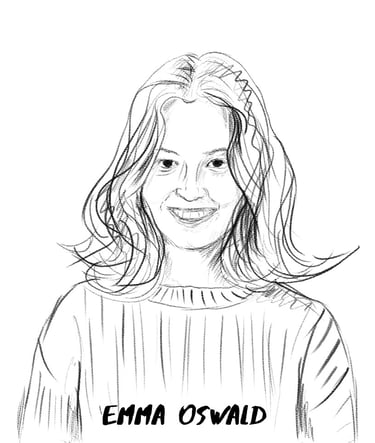

Emma (16, age at death) — Memory and Guilt
Emma exists only in fragments, a memory that refuses to stay buried. Intelligent, perceptive, and quietly resilient, she understood more than she ever voiced. In the present narrative, she appears through flashes, reflections, and half-formed recollections rather than as a continuous presence.
She represents the truth James avoids: not only her death, but his role in it. Emma functions less as a character who changes and more as a psychological constant that pressures James toward remembrance.
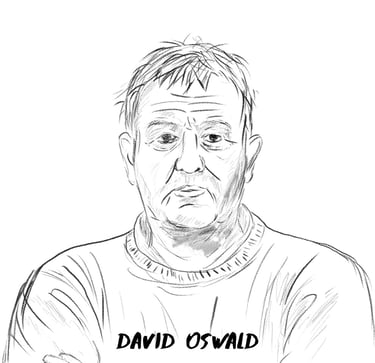
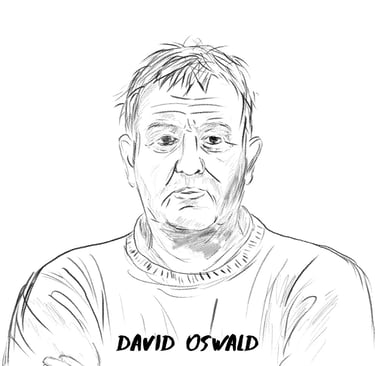
David Oswald (38)
James’ older brother, David, stayed in the village and absorbed responsibility by default. Practical and emotionally contained, he does not deny Emma’s existence but avoids speaking her name. Where James fled, David endured. Their shared silence creates a quiet, corrosive tension shaped by unspoken guilt.
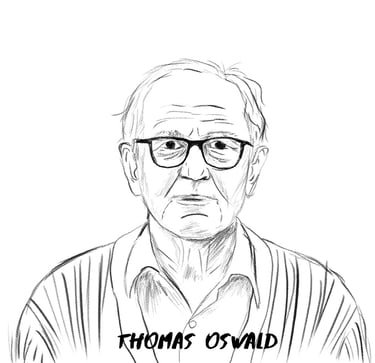
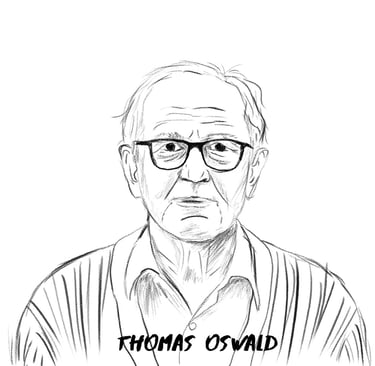
Thomas (68)
James and Emma’s father, Thomas, is stoic and emotionally unavailable. He believes silence is a form of control, keeping life manageable. James’ return disrupts the fragile stability he has built, forcing him to confront a past he believes is safer left untouched.
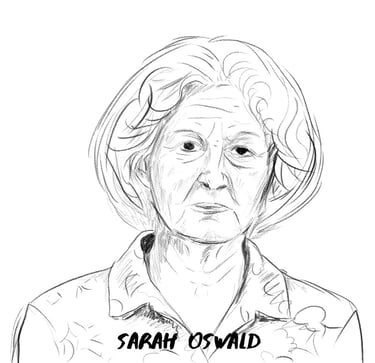
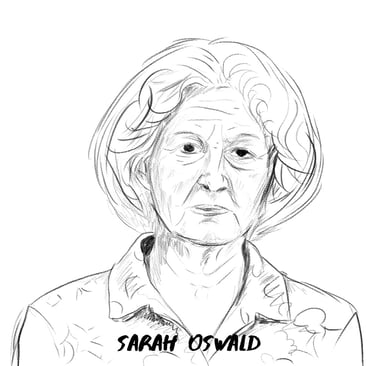
Sarah (70, age at death)
Sarah mastered emotional withdrawal as a survival strategy. After Emma’s death, she chose suppression over confrontation, believing silence would hold the family together. Her distance from James was not cruelty, but grief turned inward. In death, she leaves absence rather than closure.
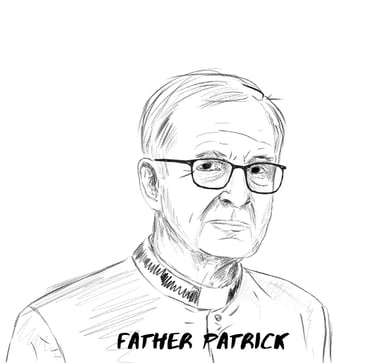
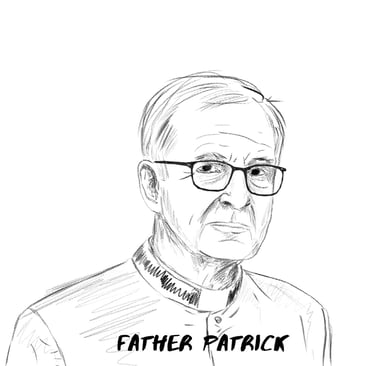
Father Patrick (64)
A custodian of order rather than comfort, Father Patrick prioritises routine and stability over emotional truth. Calm and evasive, he speaks in rehearsed reassurances. Though he knows more than he admits, he believes reopening old wounds would cause harm, embodying institutional restraint.
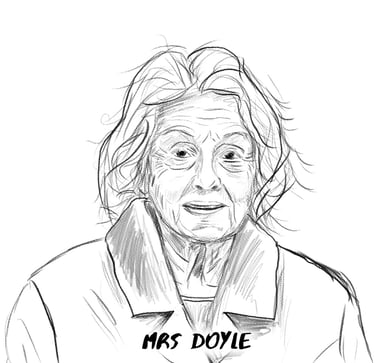
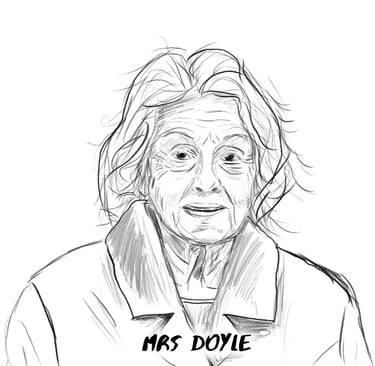
Margaret Doyle (78)
A close family friend, Margaret, carries the grief the family avoids. Spiritual and empathetic, she believes in continued connection beyond death. Her quiet heartbreak suggests long-held knowledge, and her presence at the funeral gently facilitates James’ final understanding rather than forcing revelation.
Together, these characters form a static emotional landscape, allowing James’ transformation to emerge through contrast rather than overt conflict.
This neatly ties everything back to arc, restraint, and function.
References
OpenAI (2025) ChatGPT (GPT-5.2). Available at: https://chat.openai.com
(Accessed: 19 November 2025).
Fig. 6. Digital illustration by author
Fig. 7. Digital illustration by author
Fig. 4. Digital illustration by author
Fig. 5. Digital illustration by author
Fig. 3. Digital illustration by author
Fig. 2. Digital illustration by author
Fig. 1. Digital illustration by author
All character sketches were created by the author as part of the development process.
Business address: Voice of Drew, Carlisle, CA2 6ER | UTR: 7259771174 Copyright Drew Campbell 2024