Make Every Word Count
Writing Visually with Action and White Space
SCRIPT, STORYBOARD AND PREVIS
Drew Campbell
12/3/20253 min read
Make Every Word Count:
Writing Visually with Action and White Space
This session felt like a much-needed reset on what screenwriting actually is — and what it isn’t. One line that stuck with me was the idea that good scripts feel like “the paparazzi are in the room. In other words, the writing should feel immediate, visual, and emotionally present, not literary or over-explained. A script isn’t a novel. It’s a blueprint for something that will be seen and performed.
We started by comparing two script examples. The first was deliberately awkward to read: overly wordy, dense, and confusing. It tried to describe everything, including thoughts and abstract ideas that an audience can’t physically see. Reading it aloud felt slow and clumsy, and it made the visuals harder to imagine rather than clearer. The takeaway was simple: too much description doesn’t add depth; it kills momentum.
The second example worked far better because it was economical. Short action lines, clear dialogue, and plenty of white space made it feel paced and readable. Even though it leaned closer to a shooting script, it demonstrated where strong drafting leads: clarity first, embellishment later. The tutor stressed the importance of “white on the page” — dense blocks of text slow a script down, while short paragraphs help the reader track beats, action, and rhythm.
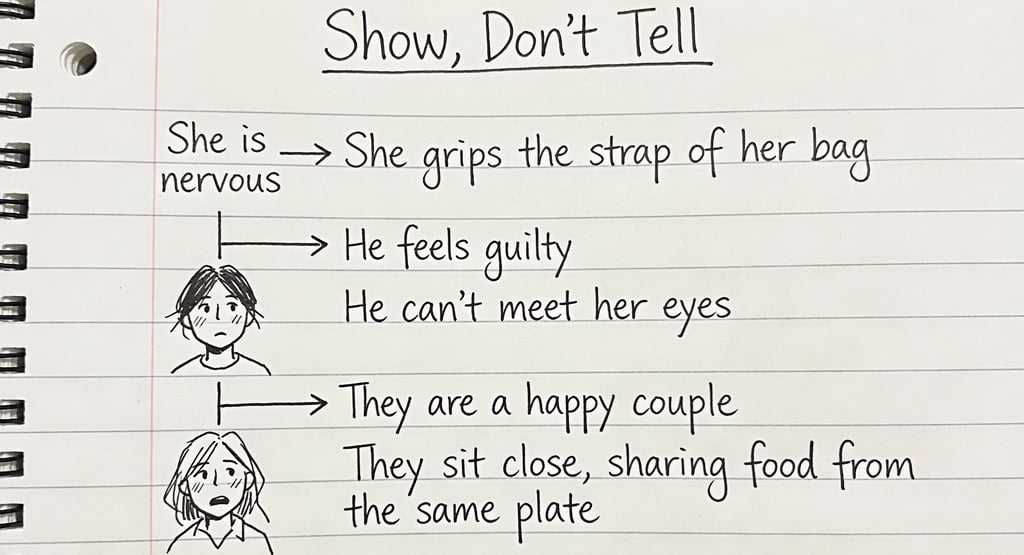
A major focus was showing character through action, not explanation. Writing internal thoughts or emotional labels (“he is angry”, “she feels upset”) belongs in prose, not scripts. Instead, emotion should be revealed through behaviour that an actor can play. For example, “Will is angry” becomes “Will punches the door. That single action communicates mood, energy, and character far more effectively.
This is linked closely to the use of strong action verbs. Verbs do a lot of storytelling work, as in Fig. 2. “Walks” can become “creeps, “limps, or “marches, each implying a different emotional or physical state. The same applies to dialogue tags — “mutters”, “snaps”, or “whispers” subtly shape tone without extra description. Choosing the correct verb helps embed character and pacing directly into the line.
We were also reminded constantly to write scripts in the present tense. What’s on the page should feel like it’s unfolding now: “Jane exits the car, not “Jane starts to exit the vehicle. Small trims like this make the writing more immediate and cinematic.
This session gave me a clear editing lens for my script. I know there are areas where I’ve overwritten to hold the scene in my head. My next draft will focus on breaking dense paragraphs into beats, replacing passive description with action, and sharpening verbs so every word earns its place. If I can do that, the script should read faster, storyboard more clearly, and feel much closer to something that could actually be filmed.
Reflection and next steps

Before
After
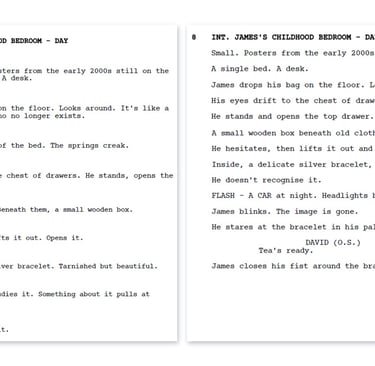
Fig.1. Before and after script comparison demonstrating the refinement of action description. (Campbell, 2025)

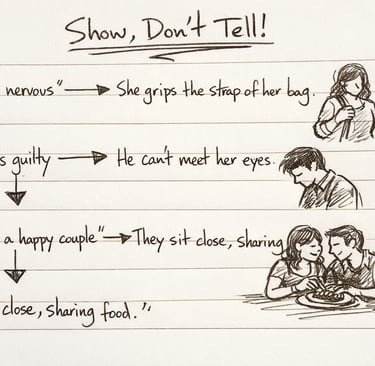
Fig.2. Passive description into action-based storytelling, and the use of specific verbs to imply character intent. (Campbell, 2025)
This comparison, Fig. 1, illustrates the progression from an early draft that relied on reflective and explanatory description to a revised version that communicates character and emotion through concise, visual action. In the final draft, internal commentary has been removed in favour of physical behaviour, object interaction, and short action beats, allowing meaning to emerge through what is seen rather than stated. The increased use of white space and present-tense action improves pacing and readability, supporting clearer interpretation for performers and visual development in storyboard and previs stages.
References
Campbell, D. (2025) Show, Don’t Tell: Passive to Action Line Diagram [Digital illustration, AI-assisted].
This post was developed with the support of AI-assisted drafting tools (OpenAI, 2025), used to structure reflection and refine clarity.
Business address: Voice of Drew, Carlisle, CA2 6ER | UTR: 7259771174 Copyright Drew Campbell 2024