Guest Speaker Reflection: Maria Caruana Galizia
Founder / Lead Producer, Candle & Bell
PROFESSIONAL DEVELOPEMENT
Drew Campbell
11/27/20256 min read
Guest Speaker Reflection:
Maria Caruana Galizia (Founder / Lead Producer, Candle & Bell)
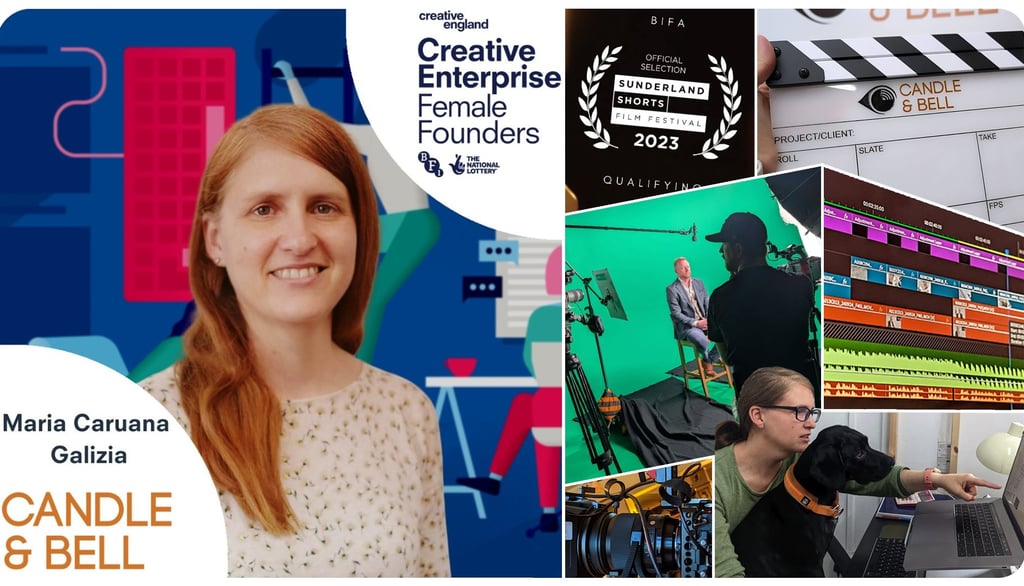
This week’s Professional Development session featured Maria Caruana Galizia, Founder and Lead Producer of Candle & Bell, and it became one of the most grounded and inspiring talks we’ve had on the course so far. What stayed with me wasn’t just the scale of her experience, but how honestly she framed creative careers as something you build over time, often without a clear map or safety net.
Maria began by reflecting on her upbringing in a small village in Malta, where access to media and creative culture was limited. There were no cinemas, no cable television, and strong traditional expectations around work and identity. Her interest in photography and storytelling didn’t fit neatly into that environment, particularly as a young woman, and she described how unusual it felt to be “the kid with the camera” at a time when that wasn’t normalised. This context felt vital because it directly shaped the values that now underpin her work as a producer: inclusivity, empowerment, and storytelling to challenge barriers rather than reinforce them.
A key theme running throughout the talk was the non-linear nature of creative careers. Maria spoke about starting in entry-level film roles in Malta, working on large productions, but reaching a ceiling in terms of progression. While work was available, there was little infrastructure to support a move into production. That limitation eventually led her to relocate to the UK, not because it offered certainty, but because it provided possibility. Even then, she was clear that the move didn’t instantly solve anything. She spoke candidly about internships, instability, companies struggling during industry downturns, and repeatedly finding herself without secure work.
What I found reassuring was how she framed persistence. It wasn’t presented as unquestioning optimism or hustle culture, but as the practical ability to keep going despite rejection, uncertainty, and factors that sit entirely outside your control. Funding decisions, commissioners’ tastes, government budgets, and broader economic shifts all influence outcomes regardless of talent or effort. This perspective feels especially relevant to Professional Development, which encourages us to understand employability as an evolving portfolio rather than a single destination.
One moment that resonated strongly was Maria’s explanation of the name Candle & Bell, inspired by Andrei Tarkovsky’s Andrei Rublev. She described the story of a young boy who successfully casts a bell despite not knowing the secret. He succeeds because he believes he can and commits fully to the attempt. Maria used this as a metaphor for starting a company — and more broadly, for committing to creative work without having all the answers.
That metaphor aligns closely with how creative projects often feel at this stage of my own development. Whether working in animation, VFX, or hybrid forms, there is always a point where planning gives way to uncertainty, and you have to trust your learning and push through the messy middle. Importantly, Maria didn’t romanticise this process. She spoke openly about doubt, imposter syndrome, financial pressure, and moments where she seriously considered giving up. What mattered wasn’t avoiding those feelings, but learning how to respond to them.
Maria also offered a clear and practical breakdown of what producing actually involves, particularly production management and line producing. Beyond the creative side, she emphasised communication, negotiation, and realism, knowing when to push back on budgets, schedules, or briefs to protect both the project and the people involved. Although I don’t currently see myself moving directly into producing, this insight felt highly transferable. Managing scope, setting boundaries, and being able to say “this isn’t achievable with the current resources” are skills that translate directly into freelance and portfolio-based creative work.
Another idea that reframed my thinking was how Maria talked about rejection. Rather than seeing it purely as failure, she described how rejected applications still create visibility. People notice patterns of commitment and progress over time. In her experience, being turned down for one opportunity often led to invitations to others later on. That reframe feels important, especially early in a career, where rejection can feel deeply personal. What mattered more than immediate success was evidence of momentum: finishing projects, delivering consistently, and showing year-on-year development.
This is linked closely to her emphasis on finishing. Maria made the point that many creatives generate ideas, but far fewer see projects through to completion. Being able to deliver work, even imperfect work, is a significant professional skill. That prompted some honest self-reflection for me. I’m comfortable with idea generation and experimentation, but finishing requires discipline, time management, and sometimes accepting limitations. If I want a sustainable career, that skill can’t be optional.
The final and most impactful part of the talk centred on values-led storytelling. Maria encouraged us to ask ourselves why we want to tell certain stories, who they’re for, and why they matter now. This wasn’t about oversharing personal experiences, but about understanding what genuinely motivates us as creators. Those values become a “north star” when projects stall, funding falls through, or direction becomes unclear. I found this particularly relevant to animation and visual storytelling, where style can easily overshadow substance if you’re not careful.
Overall, this session didn’t make the creative industries sound easy, but it made them feel navigable. Maria’s career demonstrated that progress is possible without a traditional ladder, as long as you’re persistent, reflective, and willing to engage with the industry as it actually operates. For me, the key takeaway is that professional development isn’t about finding certainty, but about building resilience, clarity, and confidence in the value of the work you’re making, and continuing to make it anyway.
References
Busuttil, S. and Briguglio, L. (2019). Malta | History, Language, & Points of Interest. In: Encyclopædia Britannica. [online] Available at: https://www.britannica.com/place/Malta [Accessed: 27 November 2025].
Galizia, M. (2018). Candle & Bell Were Winners at the 2018, Royal Television Society North East and Border Awards. Our Short film, ‘They Live in Forests, They Are Extremely Shy’, Written and Directed by Saeed Taji Farouky, and Produced by Maria Caruana Galizia, Picked up the Award for Best Short Form Drama. candleandbell.com. Available at: https://candleandbell.com/blog/winners-at-the-royal-television-society-awards-2018 [Accessed 27 Nov. 2025].
Scattered Pictures (2017) Kim to be special guest at CTBFS annual party. Available at: https://www.scatteredpictures.net/kim-to-be-special-guest-at-ctbfs-annual-party
(Accessed: 27 November 2025).
The Movie Database (TMDb) (2020) She Lives Alone [Film poster]. Available at: https://www.themoviedb.org/movie/734844-she-lives-alone (Accessed: 27 November 2025).
Televisual (2025) Doppelgänger [BBC Three short film still]. Available at: https://www.televisual.com/news/bbc-long-story-short-launches-with-seven-dramas/
(Accessed: 27 November 2025).
Boloji (2012) Boriska: Casting of bell [Film still from Andrei Rublev (1966)]. Available at: https://www.boloji.com/articles/13453/andrei-rublev-1965
(Accessed: 27 November 2025).
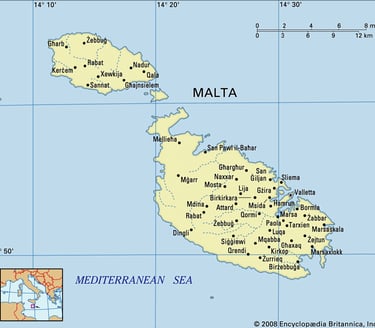
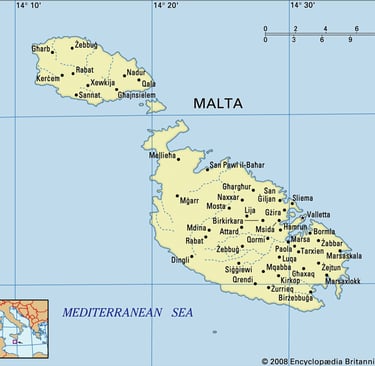
Fig. 1. Malta (Busuttil and Briguglio, 2019)
Linking this reflection to Professional Development (MDIA5007)
This reflection supports MDIA5007 learning outcomes by demonstrating critical engagement with industry practice and professional identity.
ILO 1: The session prompted reflection on professional attributes valued in industry, particularly reliability, communication, and the ability to complete work, highlighting areas I need to continue developing alongside technical skills.
ILO 2: Maria’s experiences provided insight into portfolio careers, freelance instability, and the wider labour market, reinforcing the importance of adaptability and long-term perspective.
ILO 3: Her discussion of collaboration, negotiation, and managing professional relationships highlighted the interpersonal complexity of creative work and the importance of emotional intelligence.
ILO 4: The emphasis on values-led storytelling demonstrated how creative, cultural, and business considerations intersect when shaping a sustainable career path.
Evidence for Portfolio
This post evidences my engagement with industry perspectives through critical reflection on a guest speaker session. It demonstrates how professional insights are informing my understanding of portfolio careers, values-driven creative practice, and long-term employability, contributing directly to my Professional Development portfolio.
AI Use Statement
Generative AI tools were used to support the structuring, editing, and clarity of this reflective writing. All ideas, critical analysis, and personal reflections are my own.
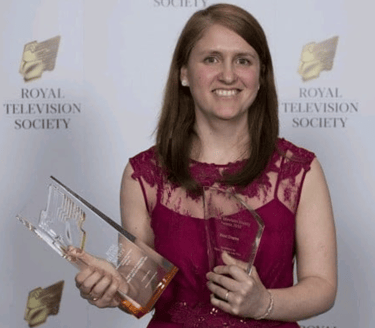
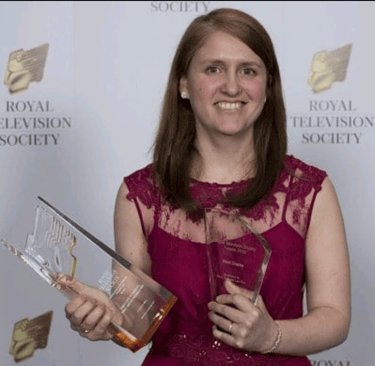
Fig. 2. Maria Caruana Galizia, picked up the 2018, RTS North East and Border Award for Best Short Form Drama. (Galizia, 2018)
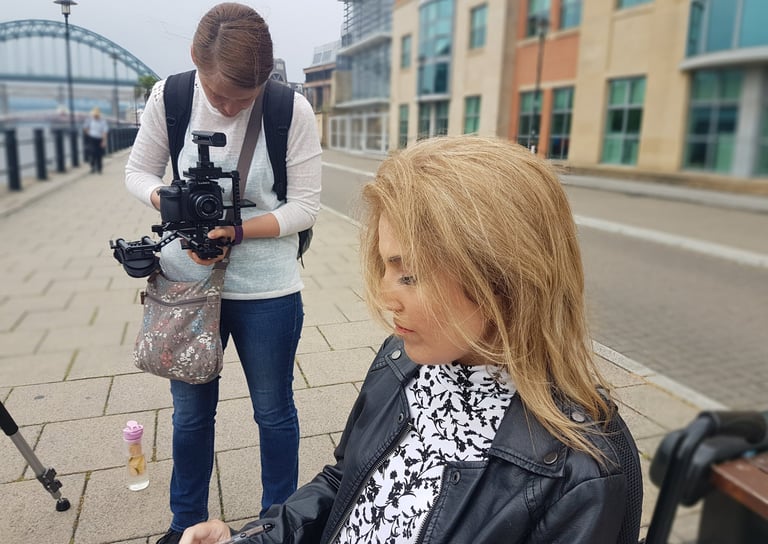
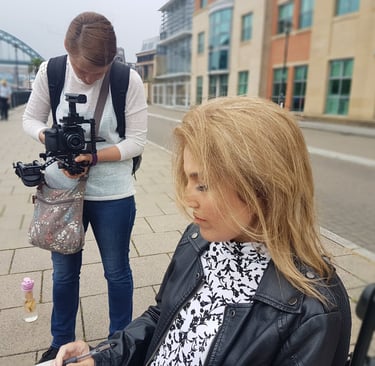
Fig. 3. L-R Maria Caruana Galizia, Kim Tserkezie. (Scattered Pictures, 2017)
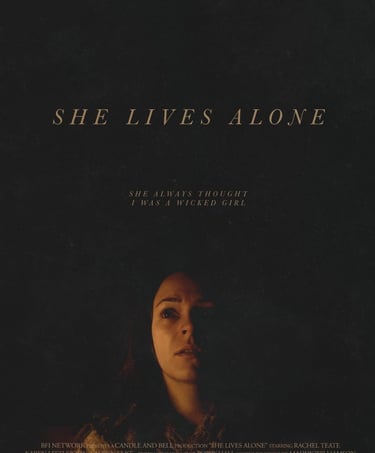
Fig. 4. She Lives Alone film poster (The Movie Database, 2020).
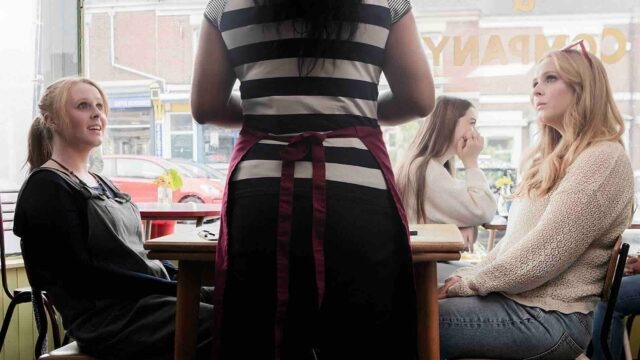
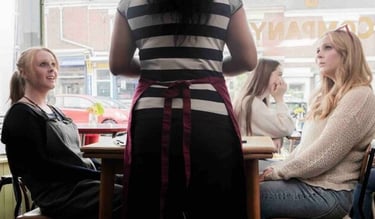
Fig. 6. Film still from Doppelgänger (BBC Three), written by Alison Carr and directed by Zak Harney. Produced by Candle & Bell (Televisual, 2025).
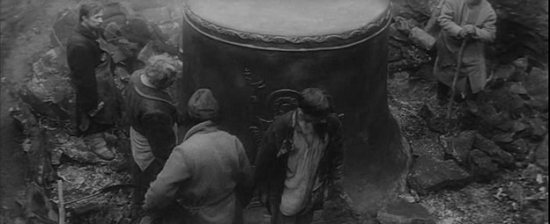
Fig. 5. Film still depicting the casting of the bell in Andrei Rublev (dir. Andrei Tarkovsky), referenced by Maria Caruana Galizia in relation to the naming of Candle & Bell (Boloji, 2012).
Business address: Voice of Drew, Carlisle, CA2 6ER | UTR: 7259771174 Copyright Drew Campbell 2024