
Forward: Final Reflection and Technical Breakdown
AVFX5103 – Animation and VFX Cinematography
ANIMATION AND VFX CINEMATOGRAPHY
Drew Campbell
5/14/20266 min read
Forward: Final Reflection and Technical Breakdown
My original idea was to recreate the scene from The Time Machine (Wells, 1895) where the inventor first travels forward into the future. I loved the original film as a child and still do as an adult. I have always been fascinated by anything involving time travel and science fiction.
Originally, I planned to use a chair covered in greenscreen material so I could superimpose myself inside a time machine environment. However, this idea evolved into creating a handheld time device made from whatever materials I could find, including wires, switches and miscellaneous electronic parts.
I also originally considered using the university car park as the main filming location and captured footage in different areas around the university grounds over time. Looking back, I realise I became too focused on the technical aspects of how I would achieve the effects and temporarily forgot about the importance of story. The idea later developed into an inventor carrying out the first human trial experiment while recording voice logs during the process.
I created a top-view map on paper to plan out the filming area, inspired by techniques demonstrated by storyboard artist Neil Edwards during his guest talk. Here is the blog post from when Neil delivered his presentation: Learning Visual Storytelling. I also produced a rough storyboard, although in hindsight I should have spent more time developing it in greater detail instead of rushing too quickly into filming.

Filming and Production
Filming outdoors helped create more realistic lighting and shadows compared to filming entirely within a studio environment. I originally planned to use the main car park area, but later realised the Homeacres building provided a much stronger visual composition and felt more believable for the type of scientist experiment scene I was trying to create. I also liked the sense of scale, depth and openness the location provided.
Filming outdoors was essential for me because I wanted to take advantage of natural lighting, and I waited for a bright sunny day to shoot the main footage. One disadvantage of outdoor filming was continuity. If I needed to refilm scenes, I would have needed similar weather and lighting conditions. Fortunately, I captured a large amount of footage with the help of fellow course student Mel.
I used a tripod throughout most of the filming process because I knew I would be tracking footage later, particularly the shots involving the time device. Since the device was handheld, some stabilisation work was still required during post-production. I also captured clean plates for the rotoscoping process, which helped make the final composite look more seamless.
The bluescreen setup took place in the studio next to AV on the top floor of the university. This footage was only used for the final over-the-shoulder shot looking out towards the futuristic city environment. I chose blue screen instead of green because it created less colour spill around the edges. Achieving a convincing result proved difficult, and I returned several times to refilm additional footage until I was satisfied with the performance and framing.
I also experimented with various camera angles throughout production. The final shot was particularly difficult because the perspective needed to match the future city scene convincingly.
Building the Time Device
One of my favourite aspects of the project was building the handheld time device. I enjoy creating props from found materials and wanted the device to feel handmade, experimental and unpredictable rather than polished and futuristic. I used switches, wires and miscellaneous parts to create something that looked functional but unstable, as though it had been assembled by an inventor experimenting beyond safe limits.
Voiceover and Storytelling
One of the biggest lessons I learned during this project was the importance of story over visuals. I became heavily focused on creating the effects inside Unreal Engine and Adobe After Effects, while initially forgetting that the audience needed context and emotional engagement.
After discussions with my tutor David Roberts, who said I should use my voice acting , I decided to approach the project as an inventor recording an experimental log before attempting the first human time jump. The “Human Trial Log 27” concept helped shape the narrative and gave the scene greater purpose and atmosphere. Inspiration from classic science fiction films also influenced the dramatic tone of the voiceover and overall presentation.
The music and soundscape became an important part of building tension and atmosphere alongside the voiceover performance.
Unreal Engine and VFX Challenges
The most technically difficult aspect of the project was compositing the greenscreen footage into Unreal Engine. I encountered multiple issues involving transparency, edge spill, image sequences and material setup. At several points I became overwhelmed by the technical side of the workflow, especially when trying to make the footage blend naturally into the digital environment. Overall, this became a massive learning curve for me.
In the end, I chose DaVinci Resolve for keying out the blue screen because I was not achieving the results I wanted using Keylight in After Effects. I found DaVinci Resolve much more intuitive for this part of the workflow.
Although importing image sequences into Unreal Engine worked correctly, I still experienced transparency and lighting-matching issues. I spent a large amount of time watching tutorials and researching solutions online. I organised the most useful tutorials into playlists so I could revisit them in the future as part of my ongoing learning process.
I initially experimented with AI-generated futuristic city environments using prompts, but the results did not integrate convincingly with my footage. I realised Unreal Engine gave me far greater control because I could animate the cameras and environments exactly how I wanted.
A large percentage of the project involved problem solving, experimentation and learning node-based workflows inside Unreal Engine. Rendering also became a major challenge, as there were many conflicting opinions online regarding the best settings and workflows. Eventually, I narrowed my research down to a few YouTube creators whose advice I found the most reliable and helpful.
Sound and Music
Sound design became extremely important in helping sell the atmosphere of the scene. Mechanical sounds, energy effects and cinematic ambience helped create tension and supported the idea that the inventor was attempting something dangerous and experimental.
Fortunately, I already have around fifteen years of experience in audio production, music, voiceover and sound design, so this became one of the areas of the project I enjoyed the most.
Final Reflection / Evaluation
This project was heavily inspired by the original The Time Machine (Wells, 1895), which had a major impact on me growing up. The film’s practical effects, experimental inventor aesthetic and themes of time travel strongly influenced my creative approach.
Looking back, I realise I spent too much time solving technical problems before fully refining the storytelling aspects of the scene. However, this project taught me a huge amount about planning, compositing, Unreal Engine workflows and problem solving under pressure.
Despite the technical challenges and long hours, this project has increased my confidence in combining live-action footage with digital environments. It also reinforced the importance of balancing technical ambition with clear storytelling.
Overall, I am happy with the final result and proud of how much I learned throughout the production process.
Refrences
Adobe.com. (2026). VFX and motion graphics software | Adobe After Effects. [online] Available at: https://www.adobe.com/uk/products/aftereffects/campaign/pricing.html?mv=search&mv=search&mv2=paidsearch&sdid=G4FRYP7G&ef_id=CjwKCAjw5ZXQBhBdEiwAI5XVWaj9b0s6_WXsUrjcF0cPKDkpgBFN55YvbZt9DyiWPhE8MgAjcPWN_RoC2FMQAvD_BwE:G:s&s_kwcid=AL [Accessed 14 May 2026].
Unreal Engine. (2026). Unreal Engine 5. [online] Available at: https://www.unrealengine.com/unreal-engine-5 [Accessed 14 May 2026].
Wells, H.G. (1895). The Time Machine. New York, N.Y.: Baronet Books.
www.blackmagicdesign.com. (n.d.). DaVinci Resolve 20 | Blackmagic Design. [online] Available at: https://www.blackmagicdesign.com/uk/products/davinciresolve [Accessed 14 May 2026].
www.steinberg.net. (n.d.). CUBASE. [online] Available at: https://www.steinberg.net/cubase/ [Accessed 14 May 2026].
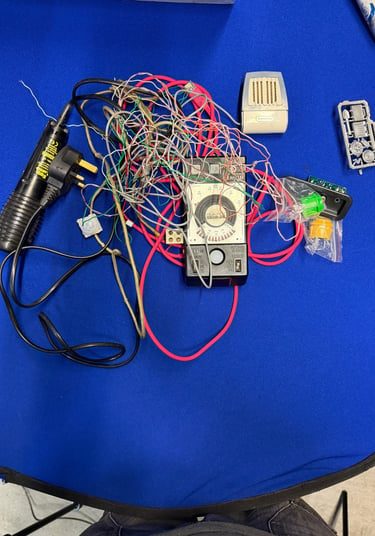
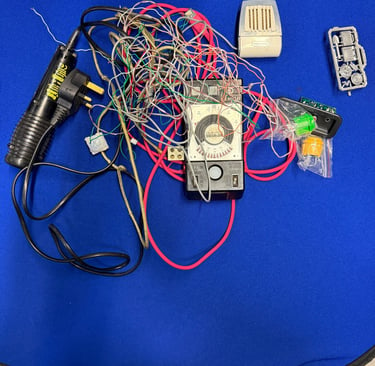
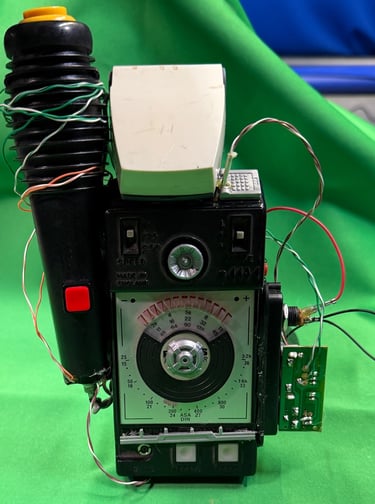
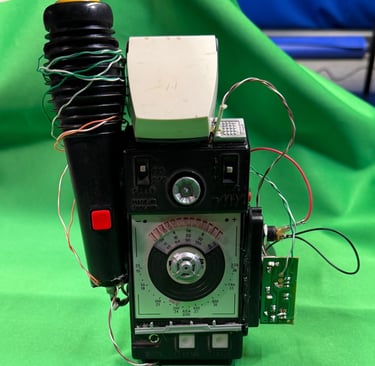
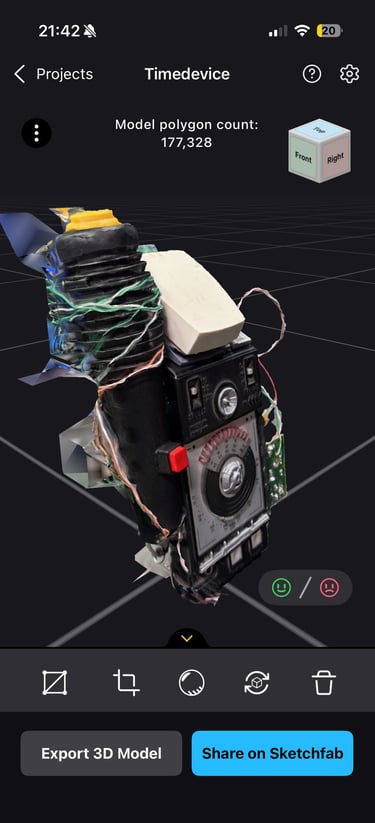
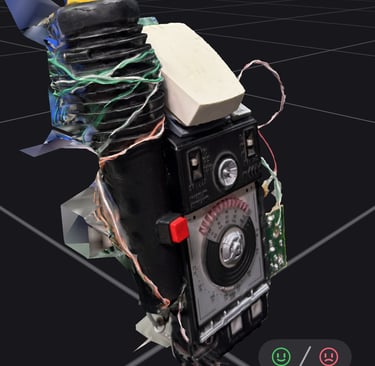
Fig. 6 and 7. Handbuilt time device created from found materials and electronic components. Fig 8. Reality Scan of device.
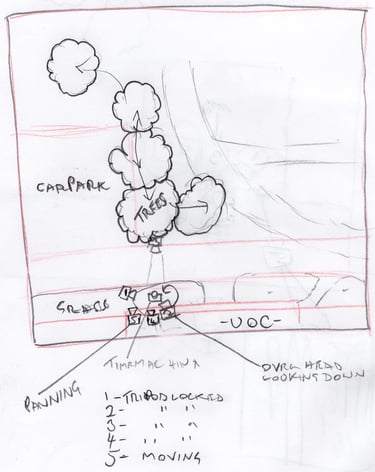
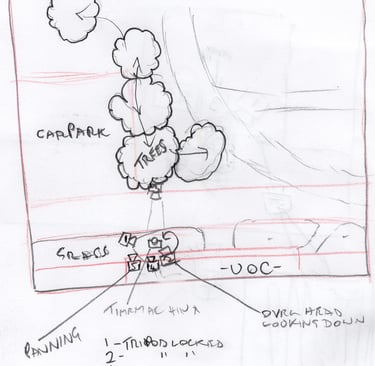
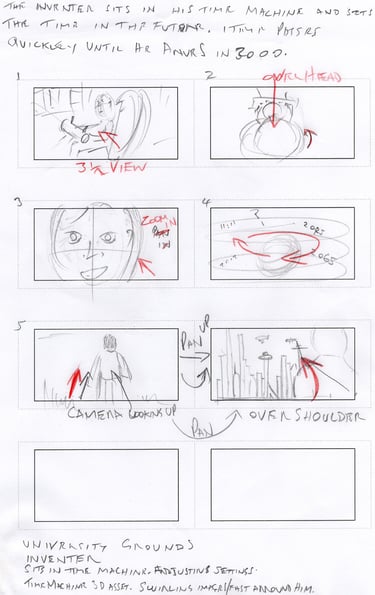
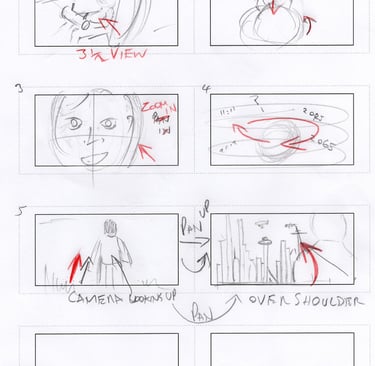
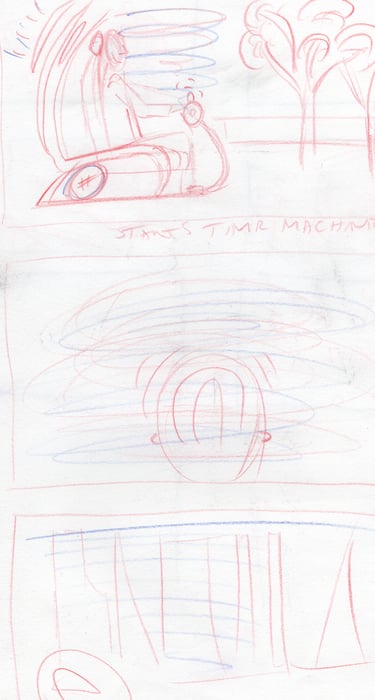
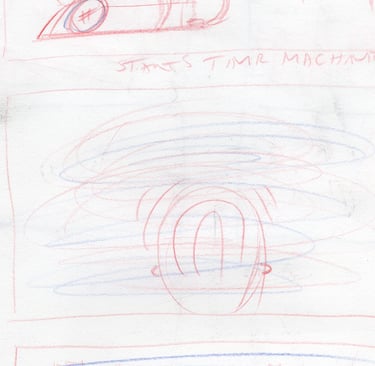
Fig. 1, 2 and 3. Early planning sketch mapping camera positions and storyboard.
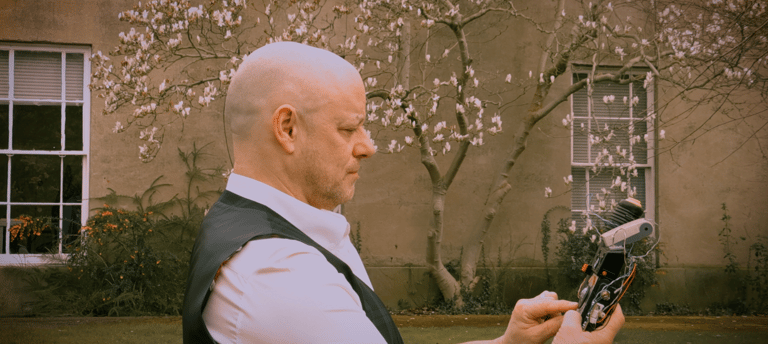
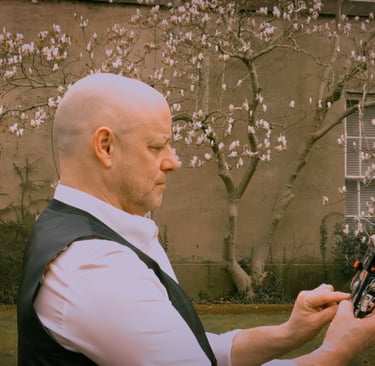
Fig. 4. Outdoor filming at the University of Cumbria grounds.
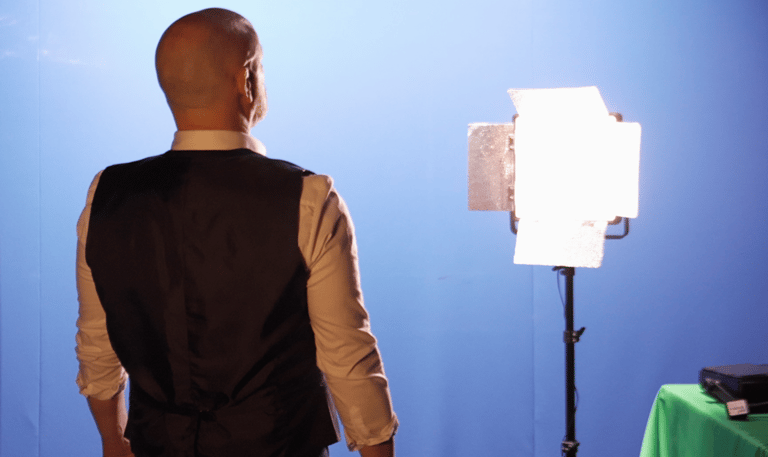
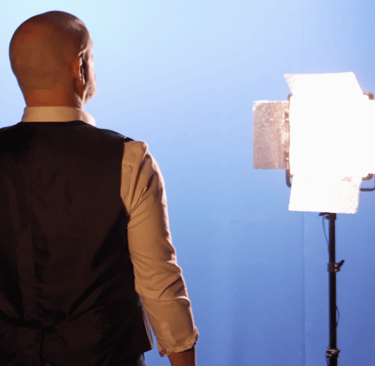
Fig. 5. Bluescreen setup used for the final over-the-shoulder shot.
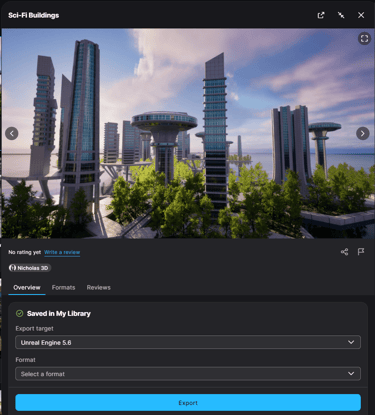
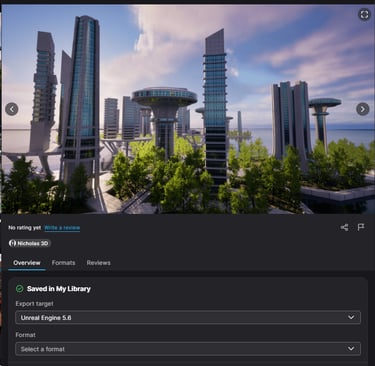
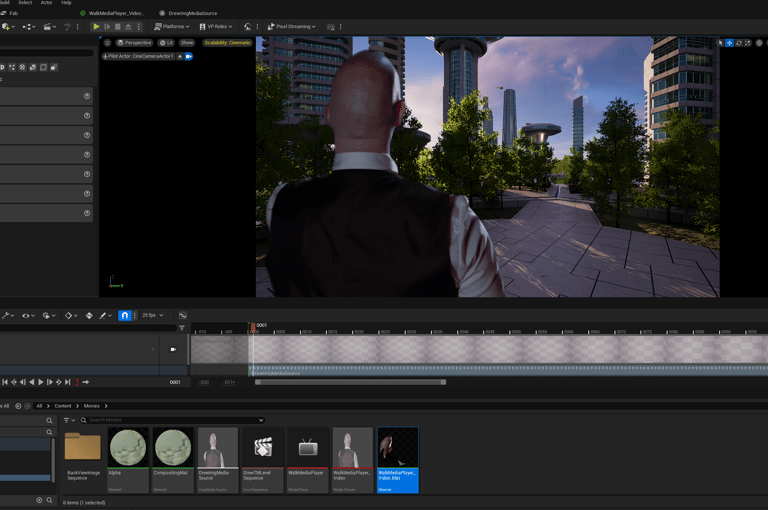
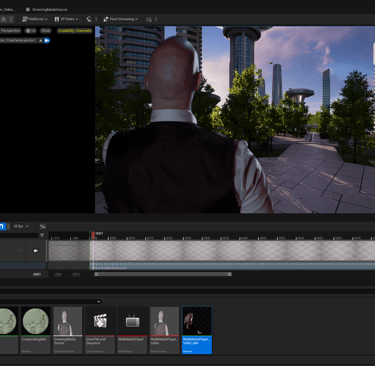
Fig. 9 and 10. Unreal Engine 5 environment used for the futuristic city reveal.
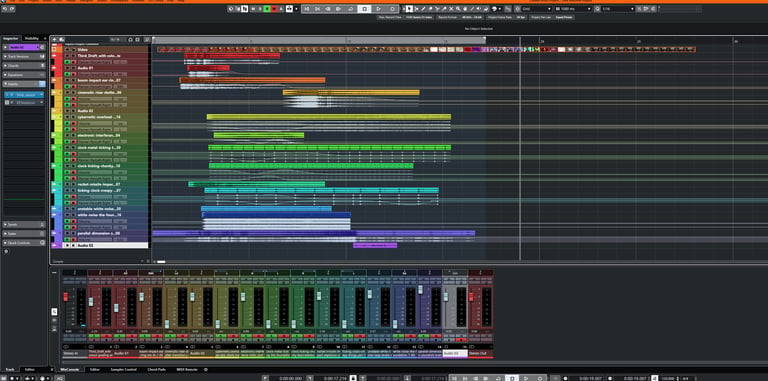
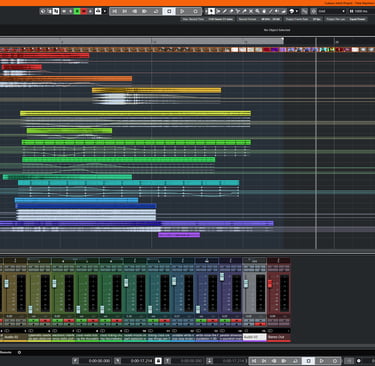
Fig.8. Cubase 12 soundtrack project for "FORWARD"
Business address: Voice of Drew, Carlisle, CA2 6ER | UTR: 7259771174 Copyright Drew Campbell 2024