
Filming and Animation Production
Stopmotion with Dragonframe
SHOT TO SCREEN
Drew Campbell
5/16/20264 min read
Filming and Animation Production
As I approach the end of Catch of the Day, I realised there were several important parts of the production process that I had not documented fully throughout my blog posts. The project evolved over such a long period of time that some stages became overshadowed by newer challenges and developments. Looking back, there was far more involved in bringing the film together than simply building a boat and animating characters.
One area I did not cover in detail was the creation of the armatures and costumes for the characters. The clothing patterns were created with the help of Linda in textiles, and various materials were used to construct the final costumes. Small details became surprisingly important. For example, Reg's woolly hat and Davey's baseball cap were created using halves of ping pong balls covered with fabric, as sugested by my friend Dawn, a 2nd year fine art student . These simple solutions helped give the characters more personality while remaining lightweight and practical for animation.
Alongside the characters, a significant amount of time was spent constructing the remaining environment pieces, including the lighthouse, cliff sections and various finishing details around the set. Many of these elements were developed alongside the animation process rather than before it, which meant I was constantly refining and improving the set as production progressed.
The filming process itself proved to be one of the biggest learning experiences of the entire project. Stop motion requires a level of patience that can only really be appreciated once you start doing it. Over the course of more than a week of filming, I captured enough animation to create approximately twenty-eight seconds of finished footage. While that may not sound like much, every movement required careful adjustment and multiple checks through Dragonframe before committing to the next frame.
Unfortunately, mistakes were inevitable. On several occasions I accidentally knocked either the camera or the boat, resulting in noticeable jumps within the animation. Some scenes had to be filmed again entirely, while others were repaired later during post-production. Although frustrating at the time, these setbacks taught me the importance of checking equipment constantly and working methodically.
Another major challenge was keying the blue screen footage. Achieving perfectly even lighting across a large blue screen is far more difficult than I originally expected. This resulted in additional time being spent inside DaVinci Resolve and After Effects solving keying problems, refining mattes and correcting unwanted artefacts. Tracking also presented challenges throughout post-production, particularly when combining animated elements with visual effects.
Much of the post-production process became an exercise in experimentation and problem-solving. Looking back, there are several techniques I should have researched and tested much earlier in the project. However, working through these issues taught me far more than following a perfectly planned workflow ever could.
I relied heavily on tutorials throughout production, particularly when creating visual effects. The sea was created in After Effects, initially using the Wave effect before eventually settling on a combination of Fractal Noise and Turbulent Displace techniques after following a online tutorials by Caleb Ward (Curious Refuge, 2017). Additional effects included animated clouds created using fractal-based techniques (Tierney, 2023), a fish fridge magnet animated against a green screen, and sea foam effects produced using carefully animated cling film positioned around the boat and cliff edges.
The project constantly required creative problem-solving, often using simple materials and techniques to achieve the desired result. While the final film is far from perfect, I am extremely pleased with what has been achieved. As my first stop motion project on this scale, Catch of the Day has taught me a huge amount about planning, set building, animation, compositing and perseverance.
Most importantly, it has shown me that successful stop motion animation is not simply about moving puppets frame by frame. It is about patience, problem-solving and continuously adapting when things do not go according to plan. Despite the challenges, seeing the completed film has made every setback worthwhile.
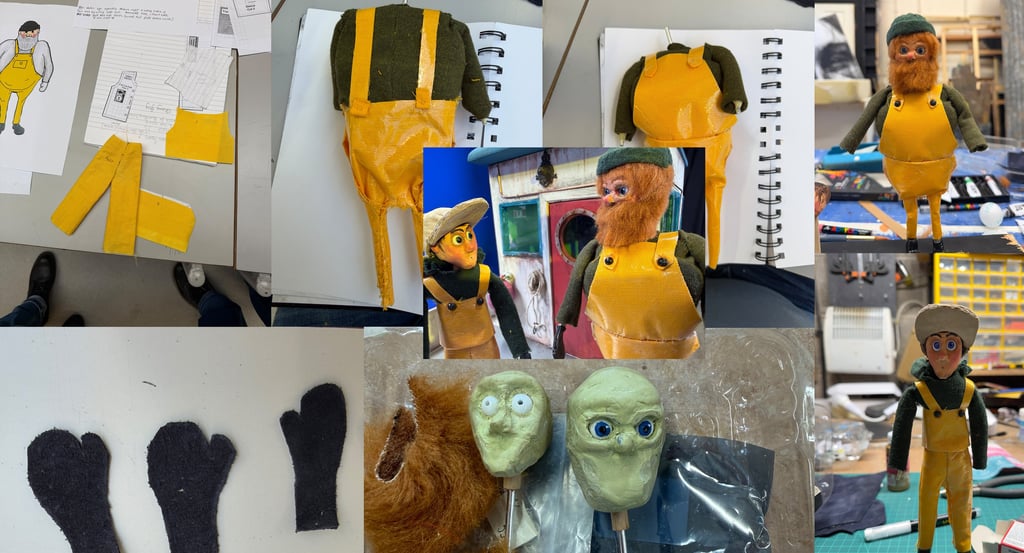
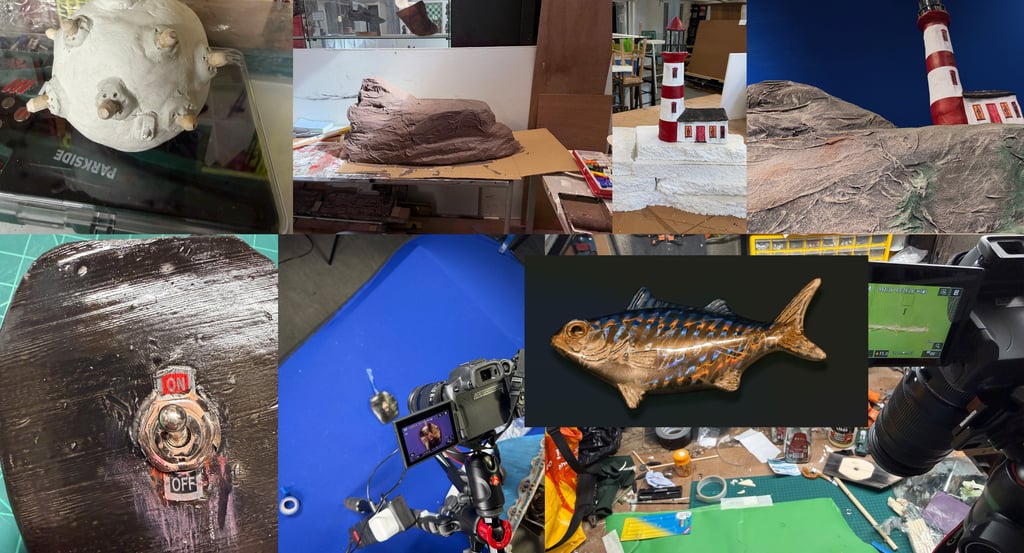
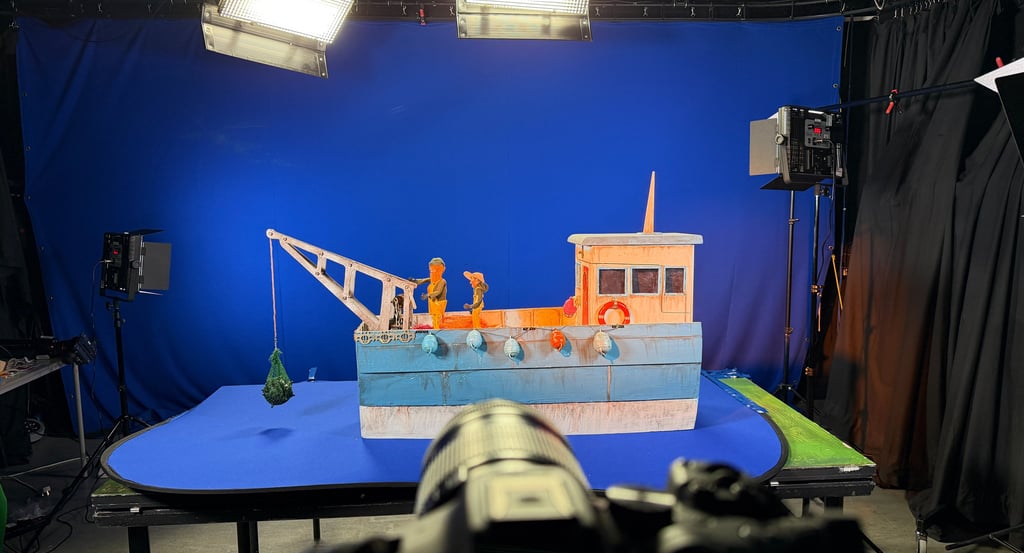
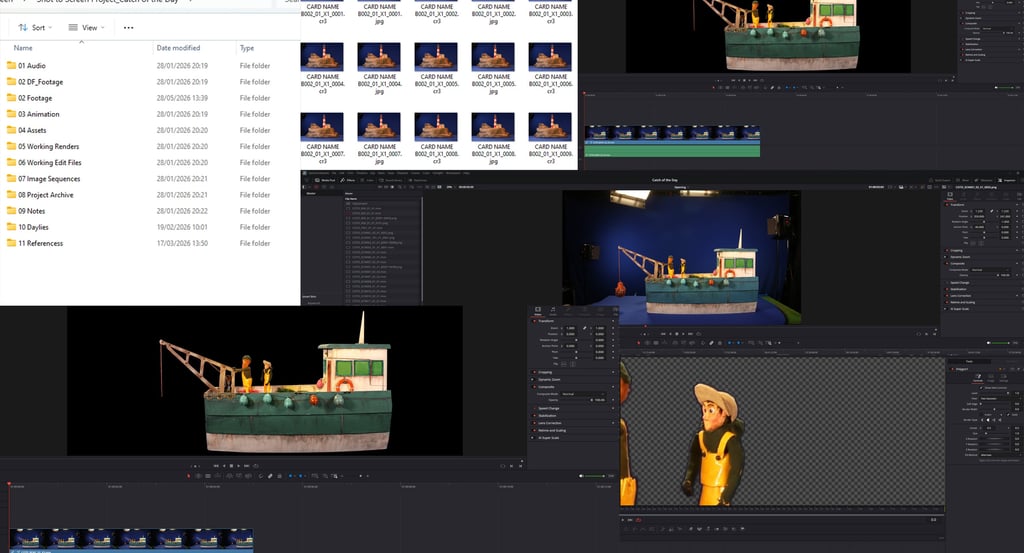
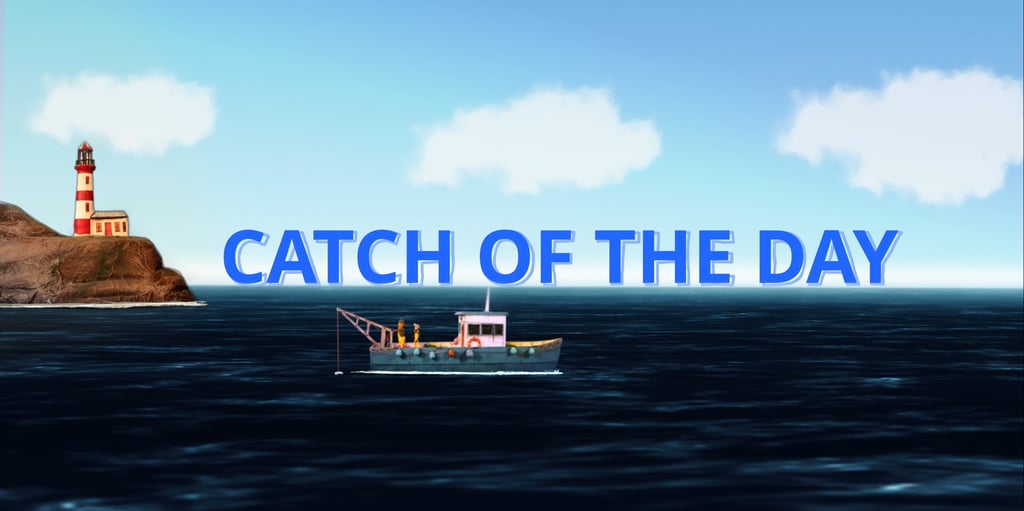
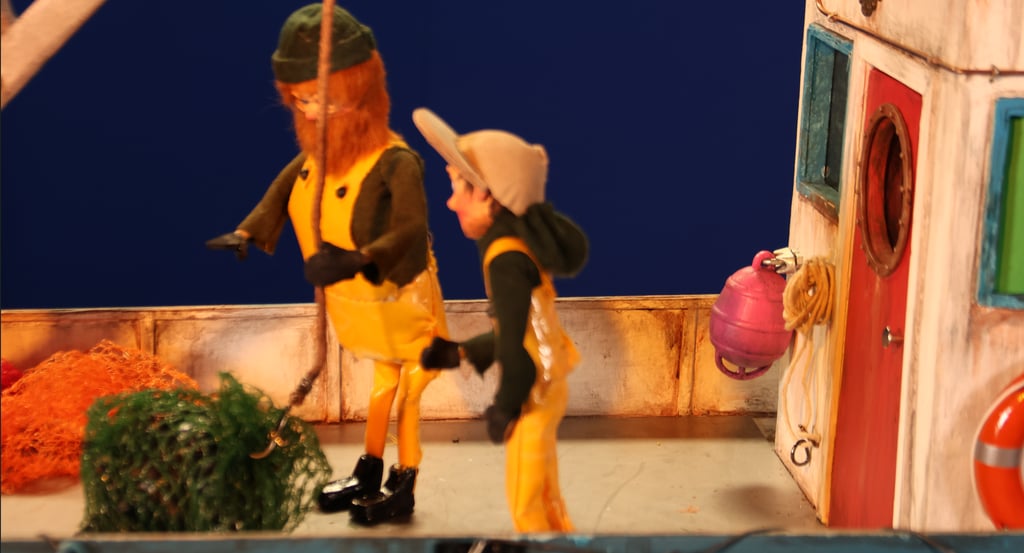
Fig. 1. Stil from "Catch of the Day"
Fig. 2. Making the armatures.
Fig. 3. Various images from building to the filming process.
Fig. 4. The filming process. There wa a spotlight with a yellow gel. This was before I toned it right down.
Fig. 5. The editing process. My filing sytem top left. Dragonframe sequence top centre and various stages of keying in Devinci
Fig. 6. Opening screenshot from the final film.
References
Curious Refuge (2017). Create an Ocean in after Effects. [online] YouTube. Available at: https://www.youtube.com/watch?v=AEbLfkrEC7g&list=PL1ShXUYKl9264Uy2OHgKZVps2sumKvO43&index=10 [Accessed 10 May 2026].Tierney, M. (2023).
Realistic Clouds in After Effects. [online] www.youtube.com. Available at: https://www.youtube.com/watch?v=s4Sl9GGyJE8.
Business address: Voice of Drew, Carlisle, CA2 6ER | UTR: 7259771174 Copyright Drew Campbell 2024