Completing The Bracelet
Final Script Reflection
SCRIPT, STORYBOARD AND PREVIS
Drew Campbell
12/18/20253 min read
Completing The Bracelet: Final Script Reflection
Completing the final script for The Bracelet feels like a genuine point of arrival. This module has taken the project from an uncertain early idea into a fully realised, industry-formatted script, supported by visual development, a partial storyboard of the key scenes, and an animatic that tests pacing and narrative clarity. Reaching this stage has been less about a single breakthrough and more about committing to process and seeing decisions through.
One of the most significant lessons from AVFX5101 was learning to prioritise structure before surface detail. Early drafts of The Bracelet were driven heavily by atmosphere, but meaningful progress only came once I properly interrogated the story’s foundations: character motivation, emotional causality, and how information is revealed to the audience. Tools such as beat sheets and scene-by-scene breakdowns forced me to justify every moment on the page, which ultimately strengthened the script as a whole.
“From what I’d seen in movies, read about in screenplay books, and found myself relying on, I developed the Blake Snyder Beat Sheet. I wrote out 15 beats and managed to squeeze them all in on a one-page document on which the fifteen islands would fit — flush left. (Snyder, 2007)
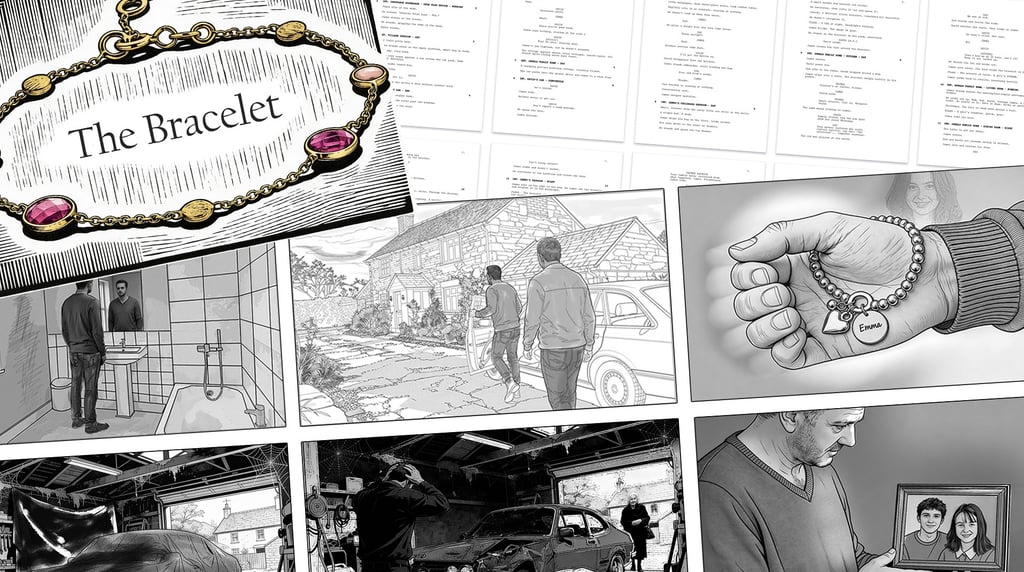
The final draft of The Bracelet reflects that shift in thinking. Rather than overexplaining emotion through dialogue, the script relies on implication, behaviour, and visual action to communicate inner states (Fig. 1). This was a deliberate move away from telling the audience how characters feel, and towards trusting the image and performance to do that work instead.
Developing the storyboard alongside the script reinforced this approach. By focusing only on the key narrative moments, the storyboard became a tool for testing intention rather than coverage. Each frame had to earn its place by advancing character, tension, or meaning within The Bracelet (Fig. 2). This process helped ensure that the script was already thinking visually before moving into previs or animation.
The animatic then allowed me to test whether those decisions actually worked over time. Seeing the story play out as a timed sequence revealed where moments needed more space, where pacing could tighten, and where silence carried more weight than dialogue. The animatic functions as a proof of concept for the script’s rhythm and emotional flow, rather than a polished edit (Fig. 3).
Revision was an essential part of this module. Several drafts of The Bracelet were structurally sound but emotionally muted, and recognising that distinction became a learning curve in itself. Iteration sharpened character relationships, clarified tone, and stripped away unnecessary exposition. By the final version, the script felt more confident precisely because it relied on restraint rather than explanation.
Having now completed the script alongside its supporting storyboard and animatic, I see The Bracelet not as a standalone document, but as a stable narrative framework. AVFX5101 has reinforced how scripting, storyboarding, and animatic development operate as a single visual storytelling pipeline. This understanding has fundamentally changed how I approach narrative-led work and will directly inform how I adapt and realise story material within AVFX5001 Shot to Screen.
Overall, this module has strengthened my ability to think structurally, write visually, and reflect critically on my creative decisions. Completing The Bracelet at this level feels less like an ending and more like proof that the foundations are solid.
References
Snyder, B. (2007) Save the cat! : the last book on screenwriting you’ll ever need. 1st ed. Studio City, California: Michael Wiese Productions.
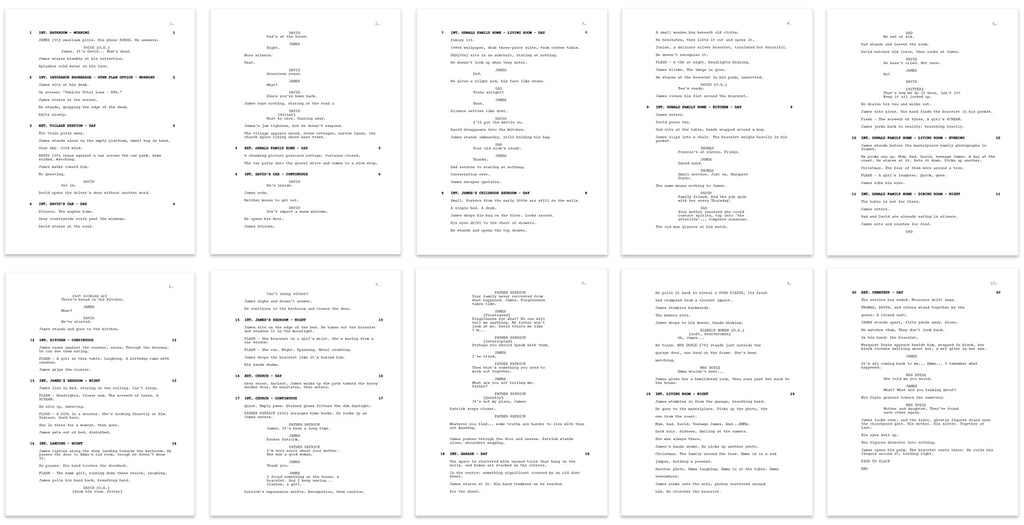
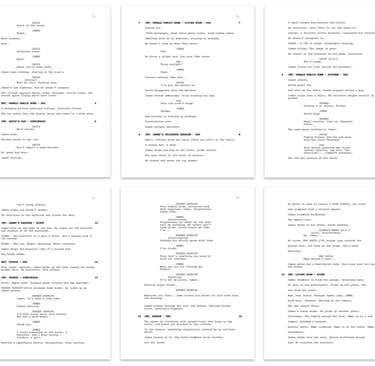
Fig. 2. Storyboard frames for key scenes
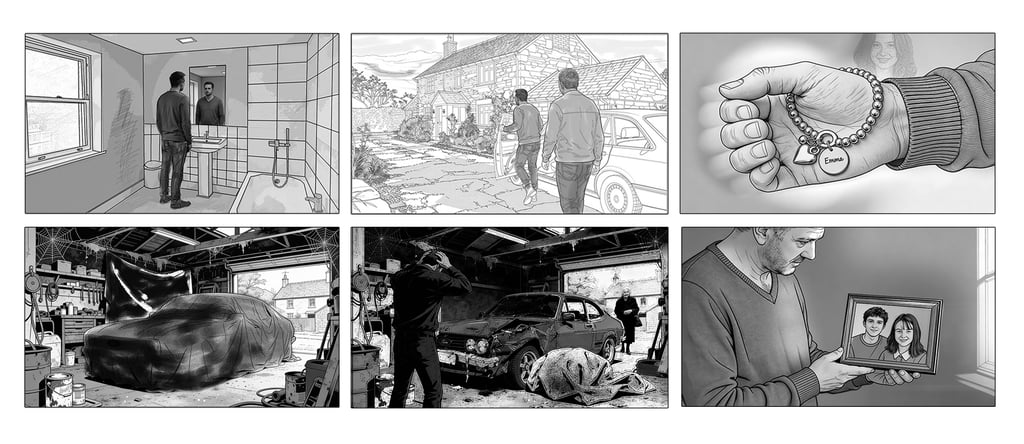
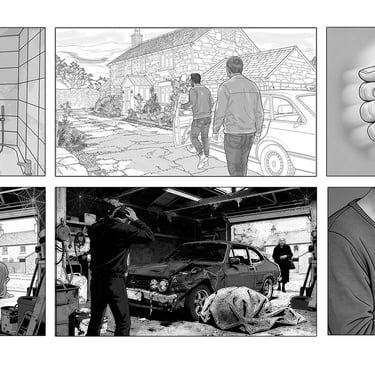
Fig. 1. Final script - The Bracelet

Fig. 3. Animatic still testing pacing and narrative flow
This post was developed with the support of AI-assisted drafting tools (OpenAI, 2025), used to structure reflection and refine clarity.
Business address: Voice of Drew, Carlisle, CA2 6ER | UTR: 7259771174 Copyright Drew Campbell 2024