Catch of the Day
Locking the Story Before I Build
SHOT TO SCREEN
Drew Campbell
1/5/20263 min read
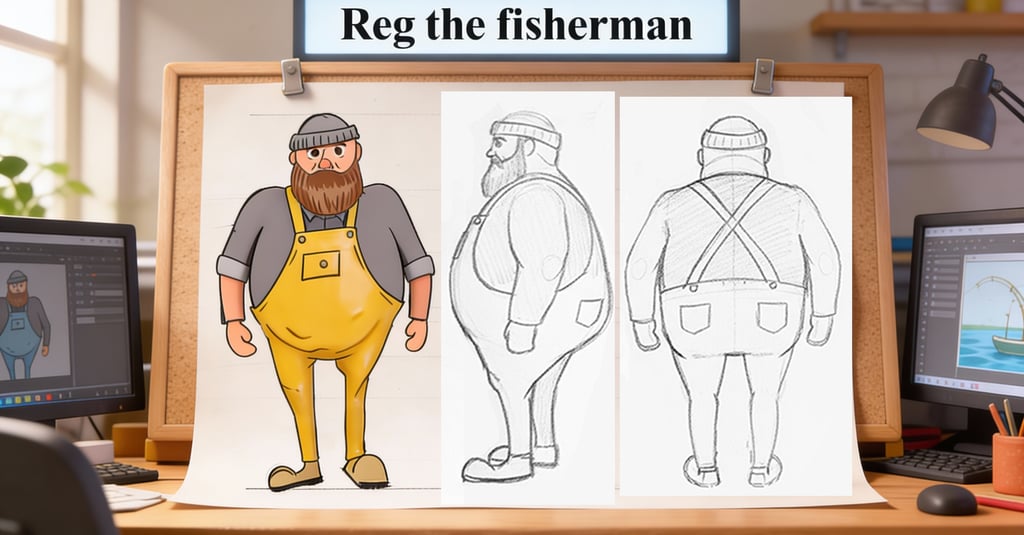
Catch of the Day – Locking the Story Before I Build
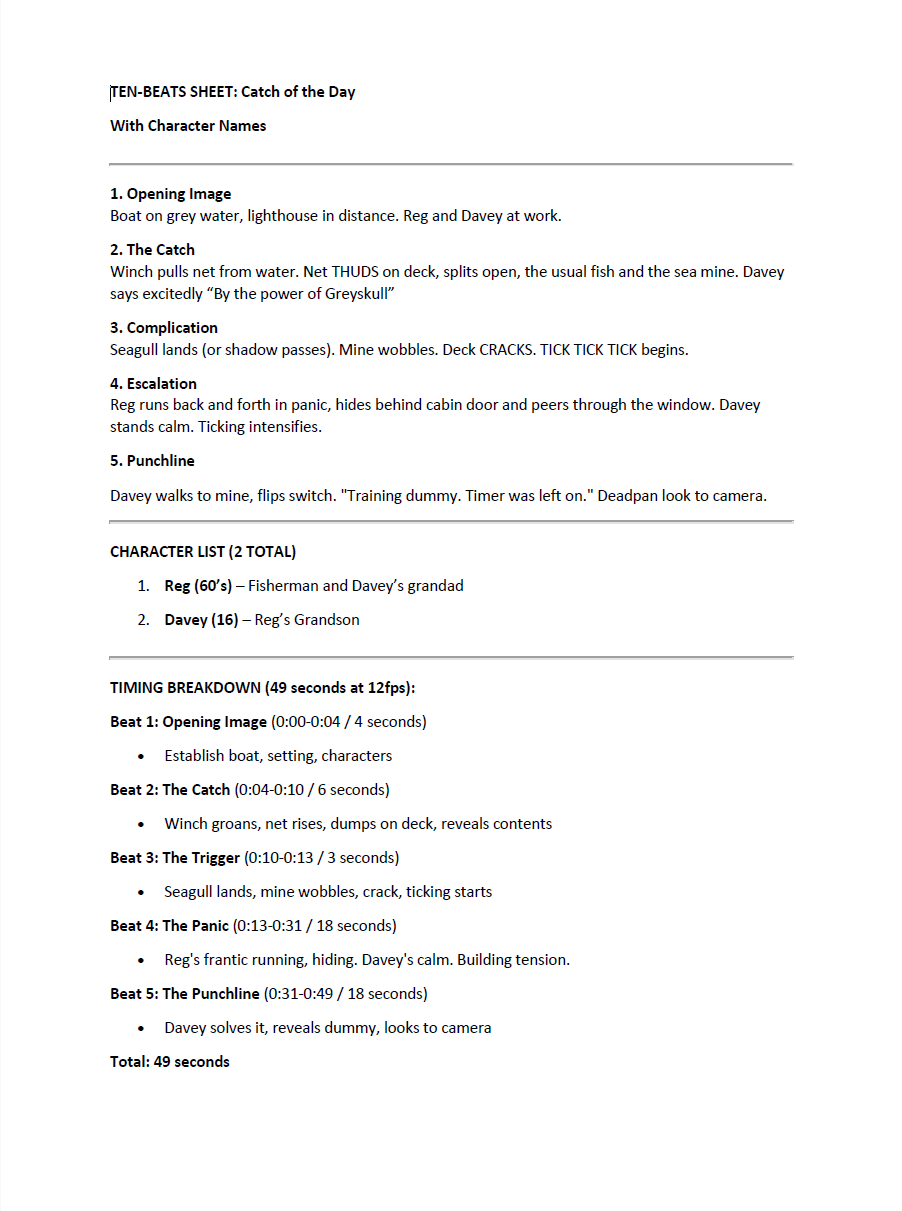
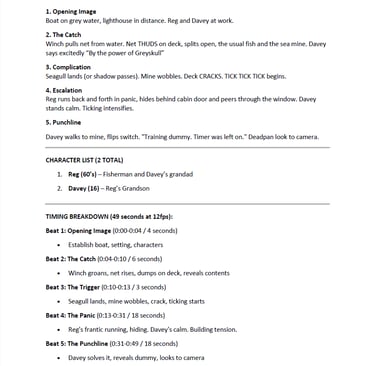
This post is a progress update on my stop motion project Catch of the Day and marks a really important transition point. Over the past week I have refined the core story documents by updating the beat sheet, tightening the treatment, and reworking the script into a clean, industry-standard format. This stage has been less about adding new ideas and more about clarity, intention, and making sure every creative decision is locked before I start building physical assets.
Why I Revisited the Core Documents
Although the original concept for Catch of the Day has stayed consistent, revisiting these documents helped me stress-test the narrative logic. Stop motion is unforgiving when it comes to late story changes. Once sets are built and puppets are animated frame by frame, even small alterations become time-consuming and disruptive. Tightening the story now reduces risk later.
A story is usually about more than the events on screen. Beneath what happens, there is an underlying meaning or idea. However, the starting point for that story can be very small, sometimes no more than a single visual gag, an odd situation, or an animation idea you are keen to explore (Lord and Sibley, 2015, p.160). Catch of the Day began in exactly this way, and refining the beat sheet allowed me to make sure that simple core idea remained clear and readable throughout the piece.
The beat sheet in particular helped me ensure the pacing worked within the short runtime. Each action has to justify its screen time, especially in a piece under a minute. The updated beats now focus more clearly on cause and effect, allowing the humour and tension to emerge visually rather than through unnecessary action.
Refining the Treatment
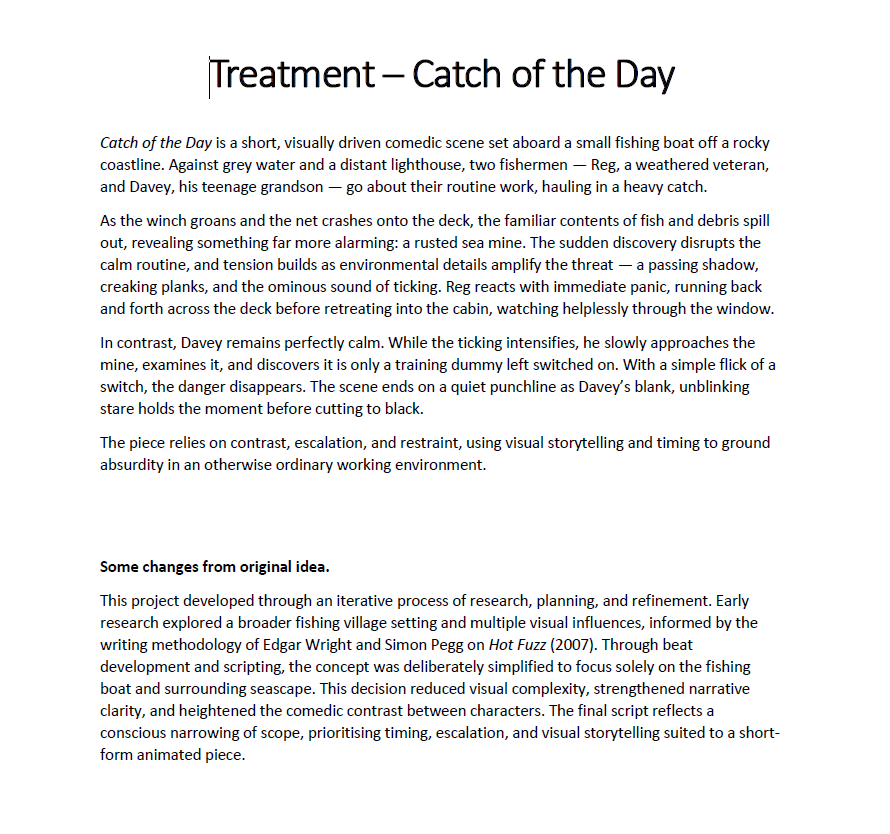
The treatment now acts as a clear narrative roadmap rather than a loose collection of ideas. I focused on describing action, mood, and visual intent instead of technical detail. This has helped me visualise the finished film more clearly and has already influenced how I am thinking about shot scale and staging.
One thing I was particularly conscious of was tone. Catch of the Day balances comedy with a sense of threat, and the treatment now reflects that tonal shift more deliberately. This will be useful when I move into storyboarding, as it gives me a consistent emotional baseline to work from.
Preparing for Storyboards and Physical Builds
With the story documents locked, my next step is to finalise the storyboard. Because the animation is only 49 seconds long, I am aiming for a concise set of key frames that communicate intent rather than over-detailing every micro-movement. This will allow flexibility during animation while still giving me strong visual structure.
Alongside this, I will begin building a mock-up cardboard model of the fishing boat. This will help me test scale, camera angles, and practical access before committing to final materials. Working physically at this stage is important for identifying issues that are easy to miss when everything lives on paper.
Next Steps
The focus now shifts from writing to making. Finalising the storyboard and constructing the cardboard boat mock-up will allow me to translate these refined ideas into physical space. This feels like a natural and necessary progression, moving from concept to tangible production planning, while keeping the story firmly in control before animation begins.
References
Lord, P. and Sibley, B. (2015). Cracking Animation. New Edition ed. London: Thames and Hudson, p.160.
Script Formatting and Industry Standards
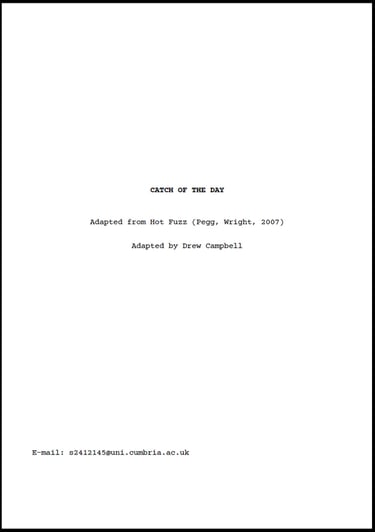
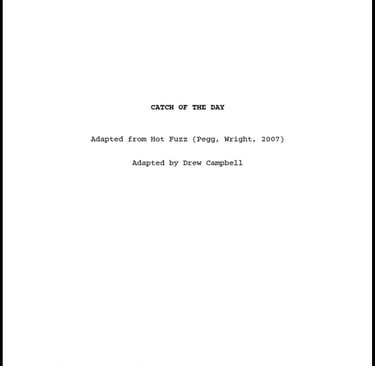
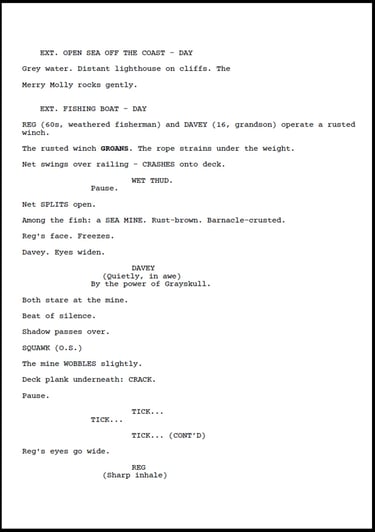
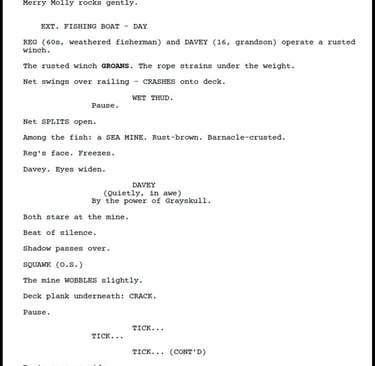
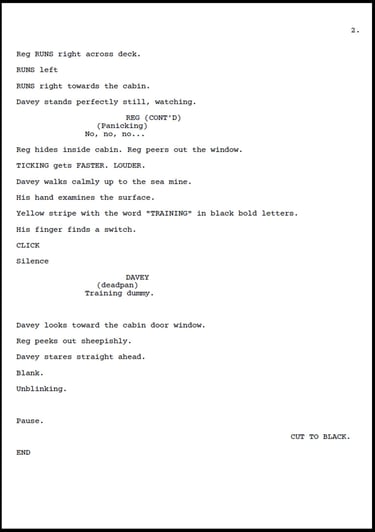
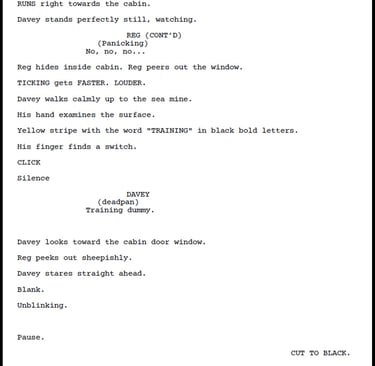
The script has now been fully reformatted to align with industry screenplay standards. Even though this is a stop motion project with minimal dialogue, having a properly formatted script improves clarity and professionalism. It also reinforces disciplined thinking about scene headings, action descriptions, and timing.
This process forced me to simplify descriptions and focus on what the audience will actually see. Anything that could not be communicated visually was either removed or rethought. This aligns well with the visual storytelling focus of this module.
Business address: Voice of Drew, Carlisle, CA2 6ER | UTR: 7259771174 Copyright Drew Campbell 2024