
Building the Boat part 3
Weathering, Character and Emerging World
SHOT TO SCREEN
Drew Campbell
1/27/20264 min read
Building the Boat
Weathering, Character and Emerging World
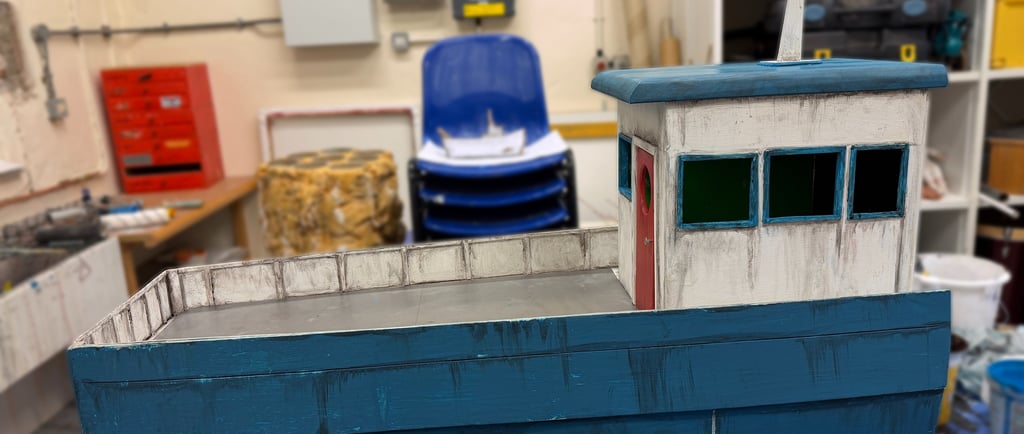
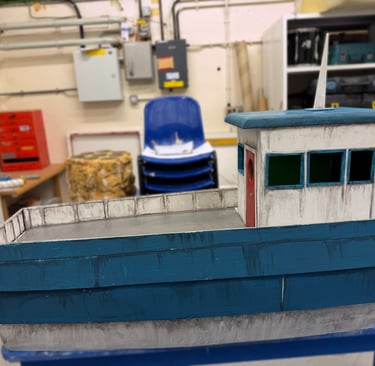
With the base colours established, the boat still felt new. Too new.
A working fishing vessel in Catch of the Day should carry history. Salt, rust and time needed to sit in its surface.
Weathering the Surface
I began with a diluted mix of black and brown, applying it unevenly to suggest general grime and exposure. Once dry, I introduced rust tones, concentrating on:
Edges
Seams
Around fixtures
Areas where water would logically gather
I was careful not to overdo it. It’s easy to mistake “more texture” for realism. Instead, I tried to think environmentally — where would this boat naturally age?
The result softened the boldness of the blue and red and grounded the boat visually. It no longer felt painted. It felt worked.
Fabricating the Metal Porthole Frame
The round window on the cabin door needed something more convincing than painted foam.
I cut a circular ring from thin foam board using a hole cutter for the inner diameter. Then, using a scroll saw, I shaped the outer circle carefully to maintain symmetry.
After measuring, I drilled 16 evenly spaced 2mm holes around the ring. Into these, I inserted modified tacks — rounded, shortened, hammered into place — and then sanded flush at the back using the vertical sander.
The painting process followed:
Silver spray base
Light brown overspray
Wiped-back ageing
Fine rust detailing by hand
On camera, it reads as metal.
This was one of those moments where craftsmanship genuinely elevated the piece. The tactile detail adds weight to the miniature and subtly supports the illusion of scale.
The Crane - Final Structural Addition
The crane remains to be built.
This will be the final major structural addition and a crucial one. It needs to:
Feel mechanically believable
Be structurally stable for animation
Support the net-haul logic in the opening
Frame well from the rear camera angle
Because I only film from the back and side of the boat, its design will prioritise silhouette and composition over full 360 degree accuracy.
Once installed, it will complete the working identity of the vessel.
Unexpected Copper and a Hint of Steampunk
While refining the cabin, I added copper wire detail running externally along the structure.
This was initially practical, suggesting pipe work and functional boat hardware.
However, once in place, it introduced a slightly steampunk aesthetic. Completely unintentional.
At first, I questioned it.
Was I drifting stylistically?
But on reflection, it doesn’t overpower the design. It simply adds layered detail and industrial character. It also breaks up flat painted surfaces and catches light beautifully.
It’s a reminder that design evolves through making. Sometimes the material suggests something you didn’t consciously plan.
The key is recognising whether it supports the world, and in this case, it adds personality without undermining realism.
Reflection
At this stage, the boat has shifted from a constructed miniature to a world element.
It now contains:
Structural logic
Surface history
Functional hardware
Subtle personality
In the context of AVFX5001 - Shot to Screen, this stage demonstrates how asset production moves beyond build mechanics into narrative support. Every detail now contributes to performance, lighting and emotional tone.
The build isn’t entirely finished, but it is no longer neutral. It has character.
Next comes integrating it fully into animation, ensuring the craftsmanship supports performance rather than distracts from it.
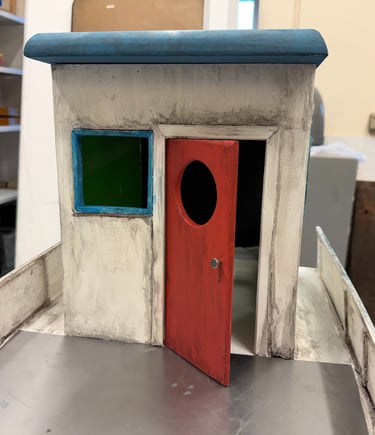
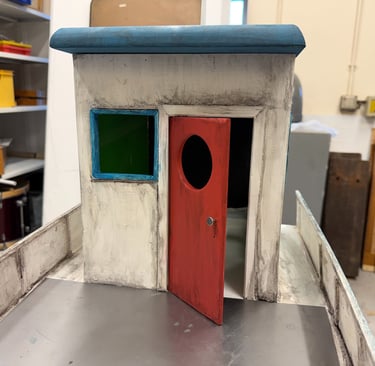
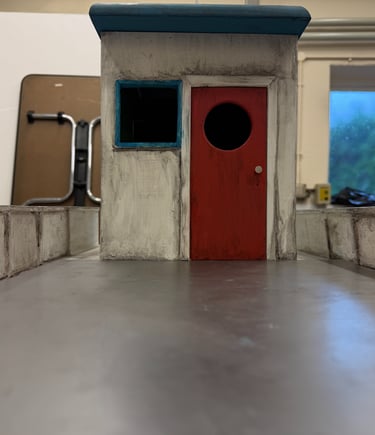
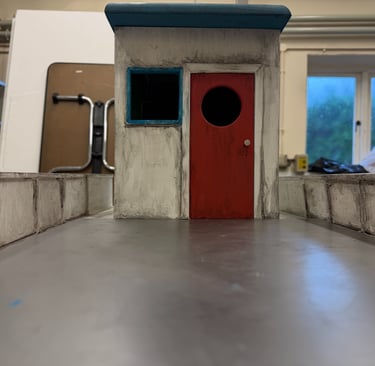
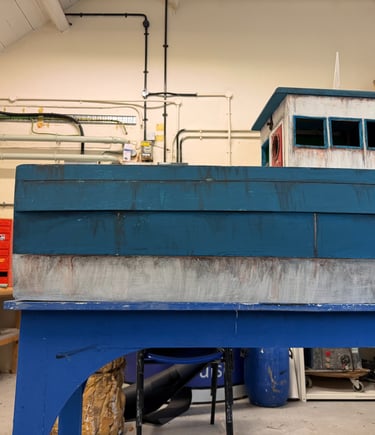
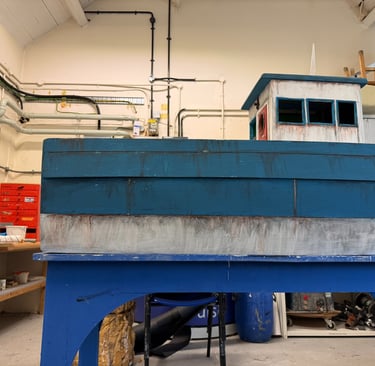
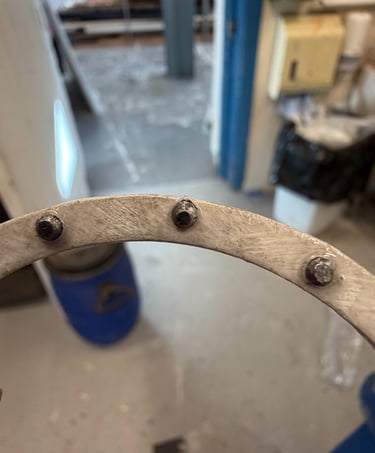
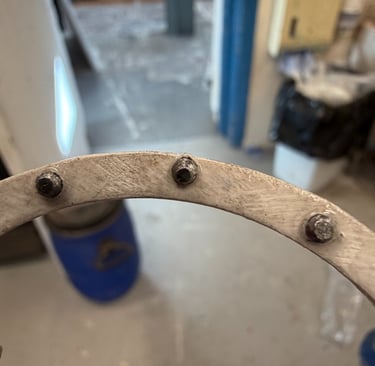
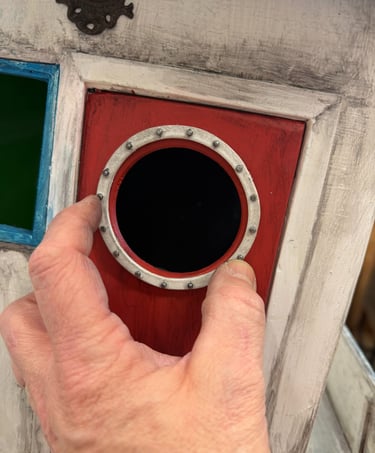
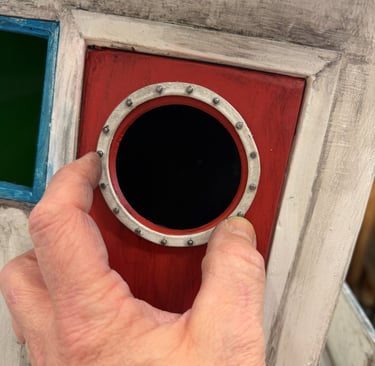
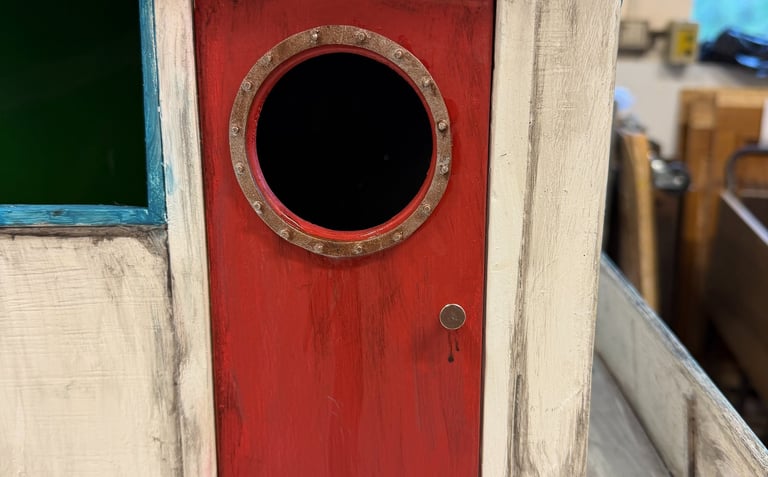
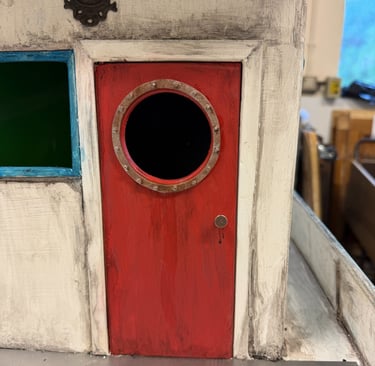
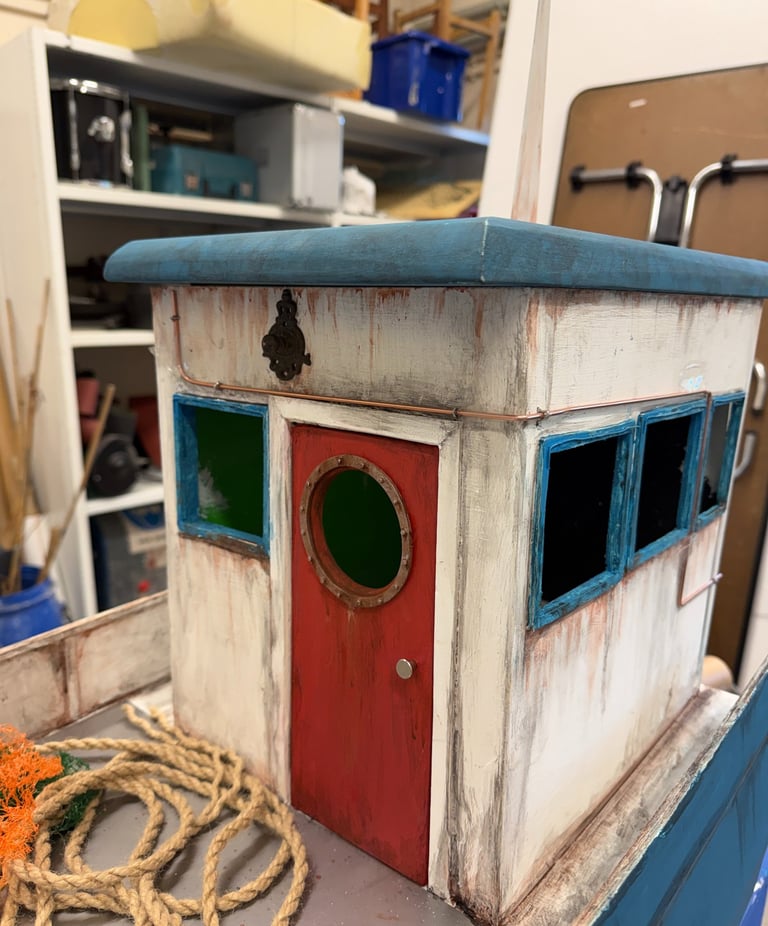
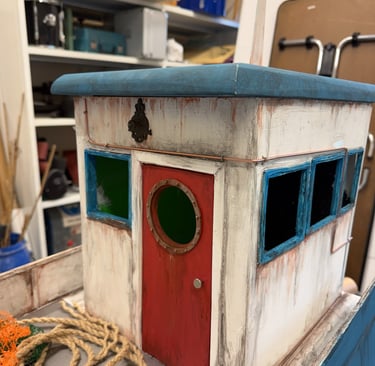
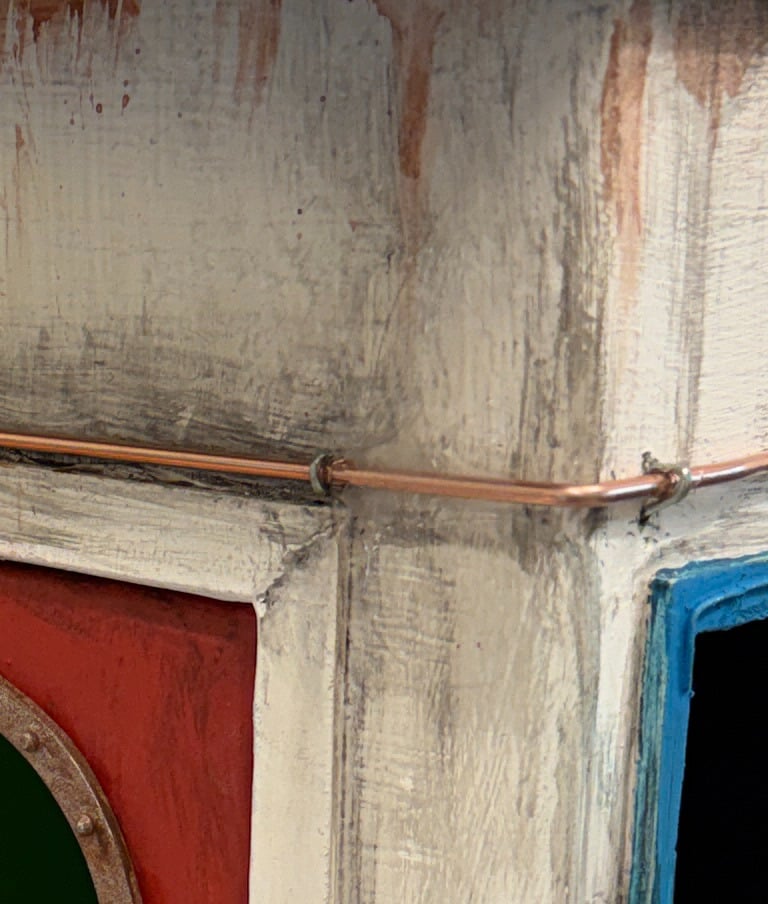
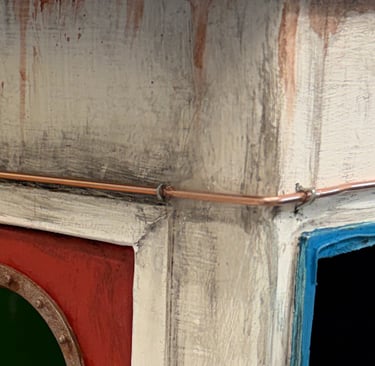
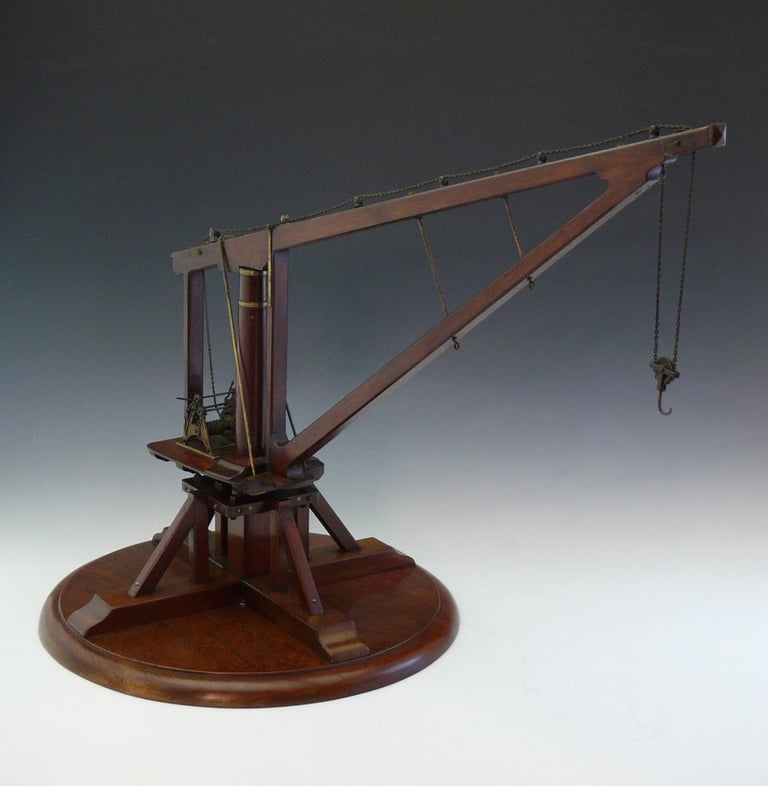
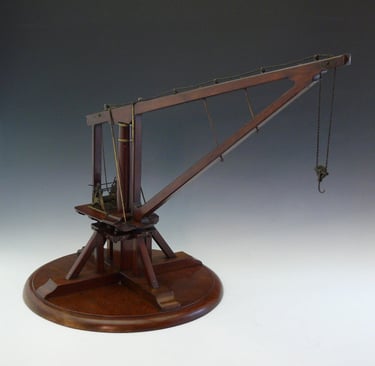
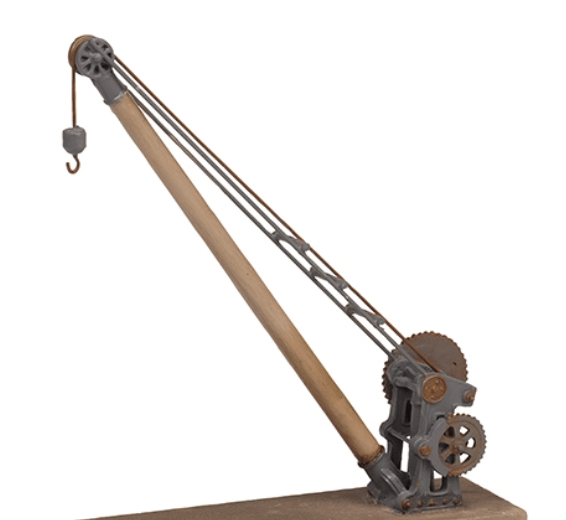
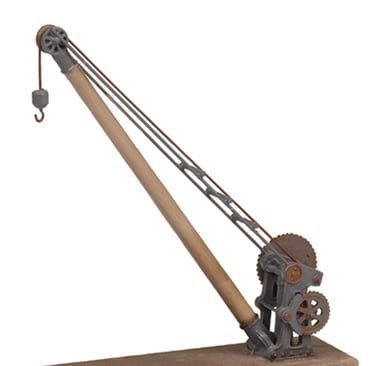
Fig 10. Reference image of a Victorian wooden crane model (1stDibs, n.d.).
Fig 11. Reference image of a yard crane mechanism (KMS Rail Tech, n.d.).
References
1stDibs (n.d.) Victorian wooden scale model crane, circa 1880. Available at: https://a.1stdibscdn.com/victorian-wooden-scale-model-crane-circa-1880-for-sale/1121189/f_170592111575015519059/17059211_master.jpeg Fig 10. (Accessed: 27 January 2026).
KMS Rail Tech (n.d.) Yard crane and loading gauge. Available at: https://www.kmsrailtech.co.uk/19838-large_default/yard-crane-and-loading-gauge.jpg (Accessed: 27 January 2026).
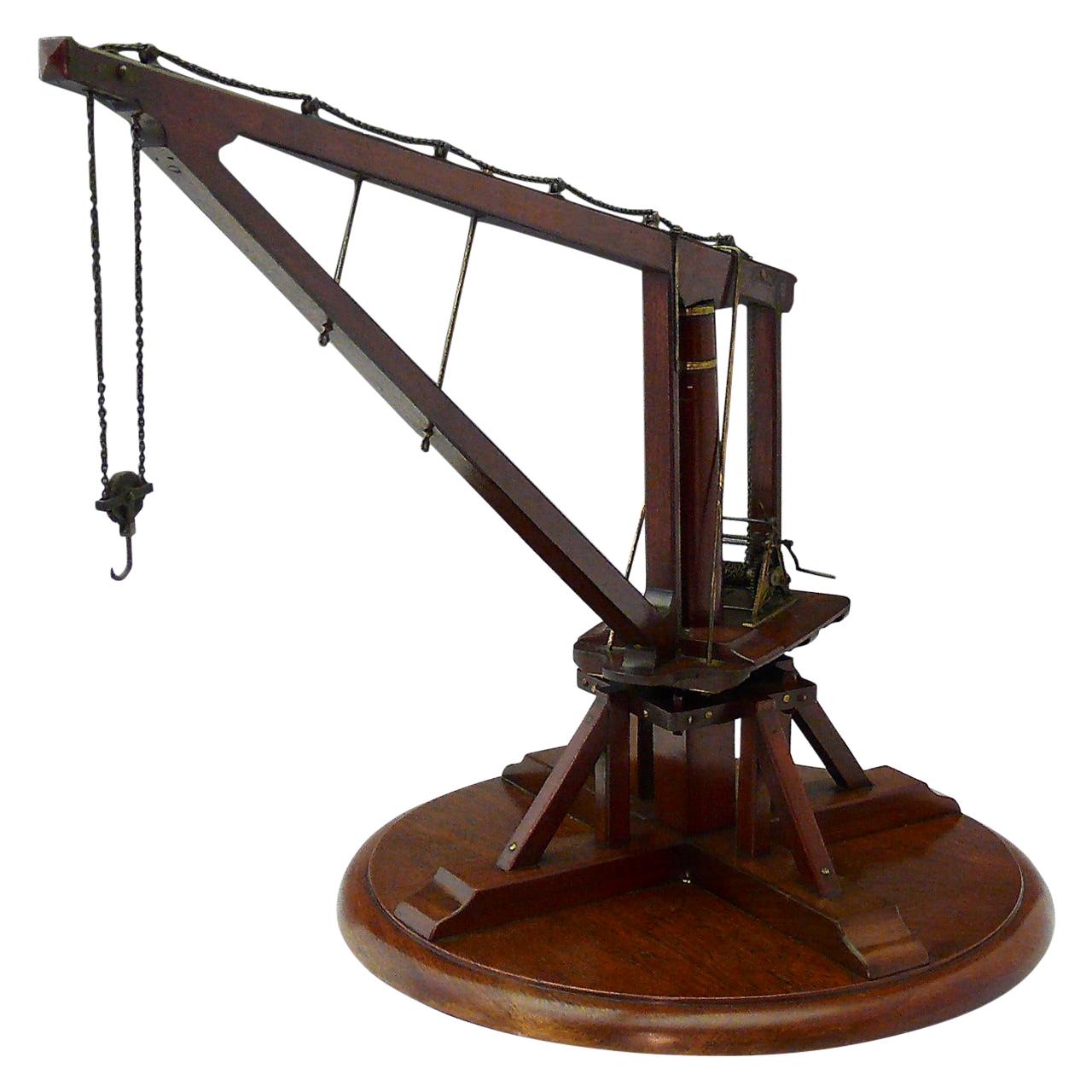
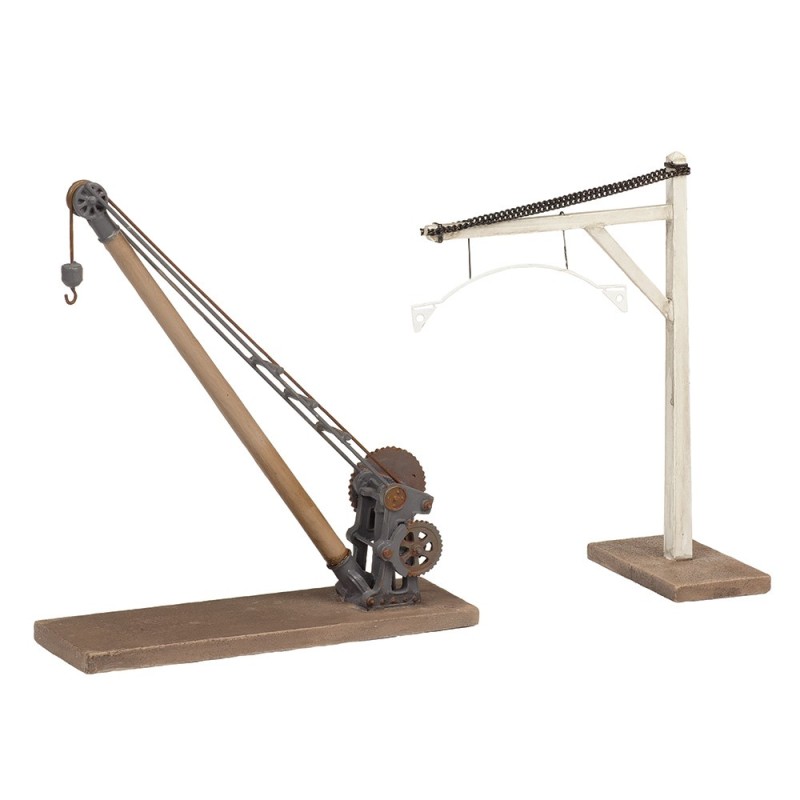
Fig. 2. Cabin door open (Campbell, 2026).
Fig. 1. Hull base structure in progress (Campbell, 2026).
Fig. 3. Cabin door closed (Campbell, 2026).
Fig. 4. Boat hull (Campbell, 2026).
Fig. 5. Portal (Campbell, 2026).
Fig. 6. Portal (Campbell, 2026).
Fig. 7. Portal finished and attached to door (Campbell, 2026).
Fig. 8. Cabin with copper wire (Campbell, 2026).
Fig. 9. Cabin with copper wire detail for pipework (Campbell, 2026).
Business address: Voice of Drew, Carlisle, CA2 6ER | UTR: 7259771174 Copyright Drew Campbell 2024