
Building the Boat
From Plans to Practical Structure
SHOT TO SCREEN
Drew Campbell
1/16/20263 min read
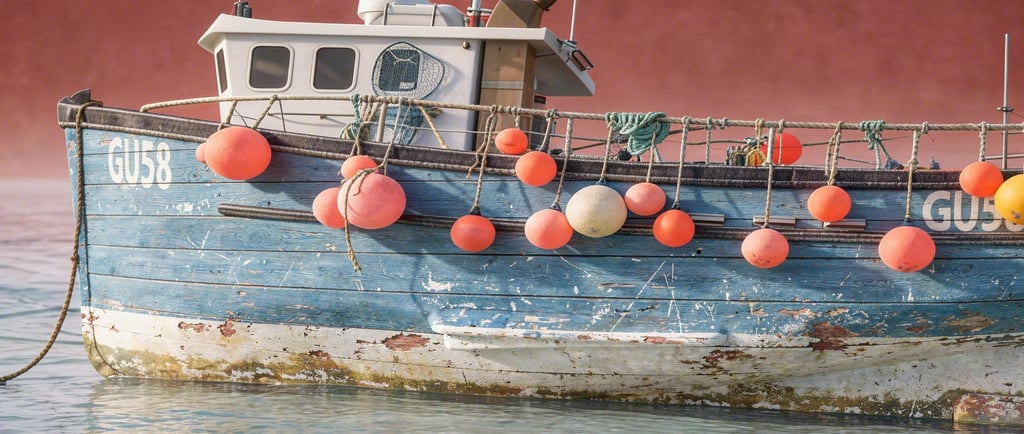
Building the Boat – From Plans to Practical Structure
Before I could animate Reg pacing the deck in panic, I needed the deck itself.
The boat has always been central to Catch of the Day. It isn’t just a backdrop, it’s the entire stage for the action. That meant I couldn’t treat it as a quick prop. It had to feel structurally believable, practical for animation, and intentionally designed for camera.
Starting with Plans and Cardboard
The first step was sourcing layout plans for a small fishing boat. I wasn’t looking for exact historical accuracy, but I needed proportional logic, something grounded in real-world boat construction.
Rather than jumping straight into wood, I built a small experimental model from cardboard. This allowed me to:
• Understand hull curvature
• Test scale against my characters
• Visualise deck space for performance
• Identify structural weak points early
The cardboard prototype wasn’t about aesthetics. It was about spatial reasoning. It gave me confidence before committing materials and workshop time.
Translating Plans into Structure
Once satisfied with the proportions, I moved into the workshop and began with the deck.
I deliberately built only the back half of the boat, because that’s all I’ll ever film. That decision alone reduced build time, material cost and unnecessary complexity. It’s a small production choice, but it reflects something I’m becoming more aware of, build only what the camera needs.
The order of construction was intentional:
1. Deck shape first
2. Internal supports
3. Hull form
On the filming side, I added three strips of wood to define the hull structure. On the non-filming side, only one strip was necessary. Again, this was about efficiency and camera awareness rather than symmetry for its own sake.
Building the Cabin
With the hull structure established, I moved onto the cabin.
I constructed:
• A doorway
• A window beside the door
• Three windows along the filming side
• A shaped and bevelled roof
The bevel on the roof wasn’t decorative, it softens the silhouette and helps catch light in a more natural way. I’m already thinking ahead to how it will read on camera under directional lighting.
At this stage, the boat moved from “structure” to “set”.
What began as lines on a plan was now something with presence. Standing in the workshop looking at it, I could start to imagine Reg running across the deck.
Reflection
This stage has reminded me how important it is to prototype and plan before committing to final materials. The cardboard model saved me from structural guesswork, and the decision to build only what the lens sees has reinforced my understanding of production efficiency.
In Shot to Screen terms
AVFX5001 Shot to Screen MDF, this is where asset conceptualisation becomes tangible. I’m not just adapting a scene narratively, I’m building the physical world that enables it.
Next, I’ll move into detailing, paint decisions and surface treatment, where the boat shifts from constructed object to believable working vessel.
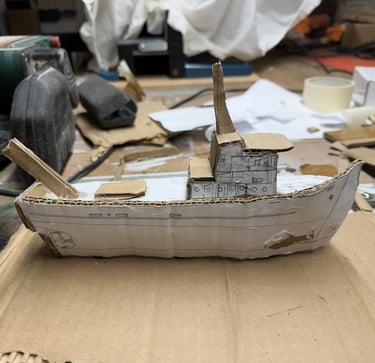
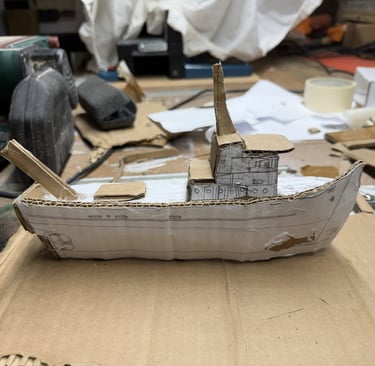
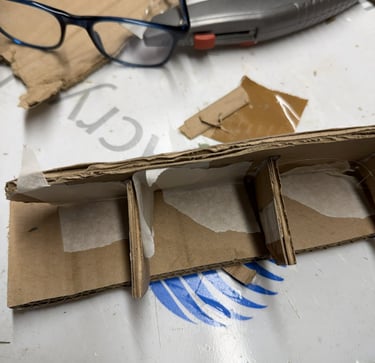
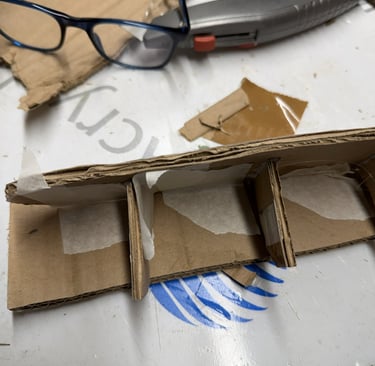
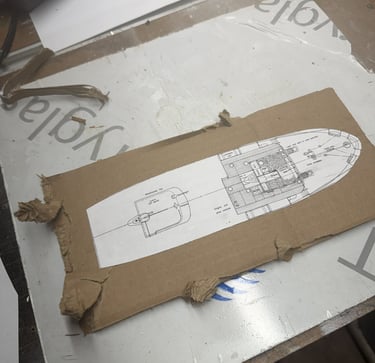
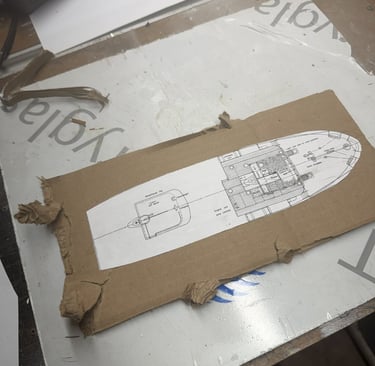
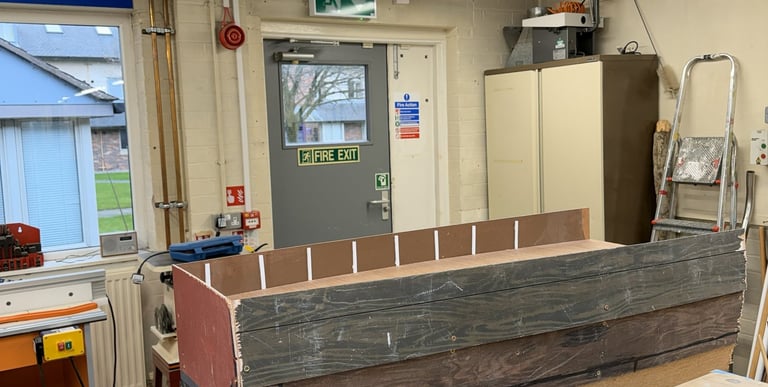
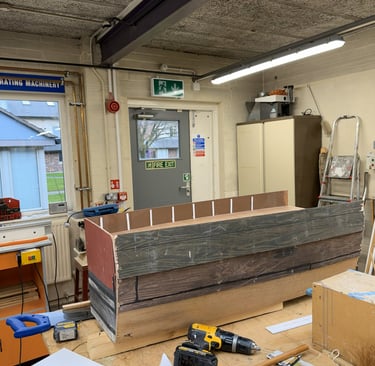
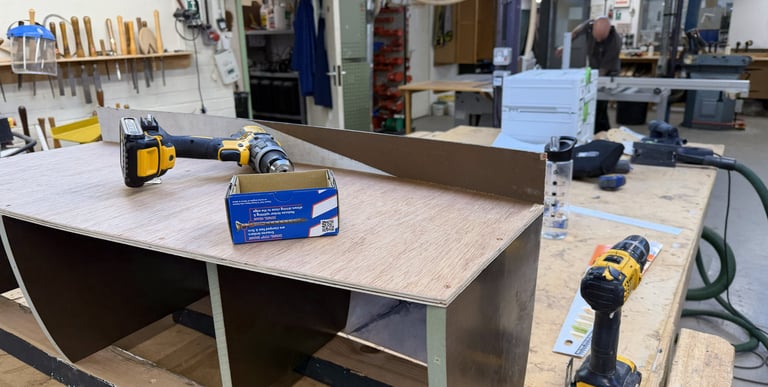
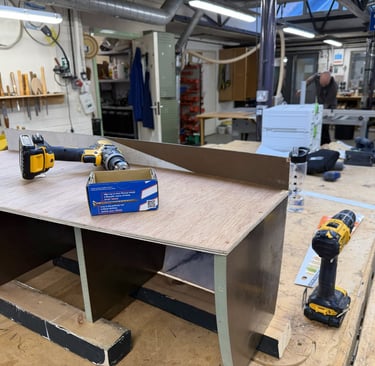
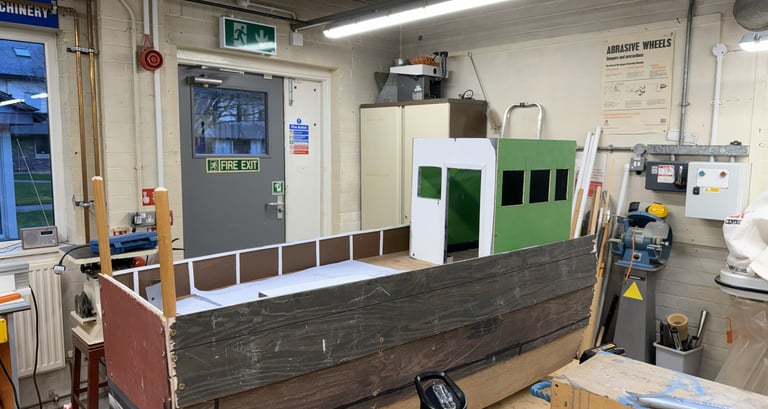
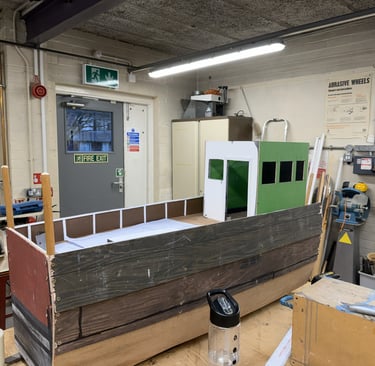
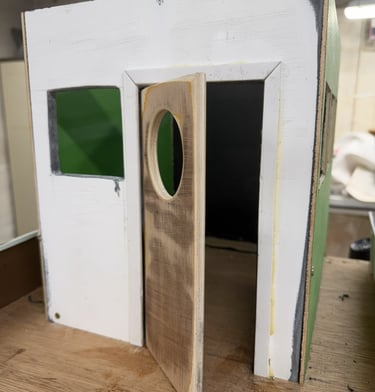
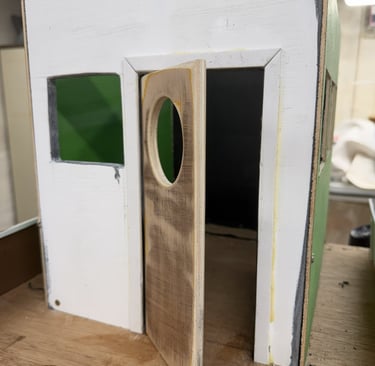
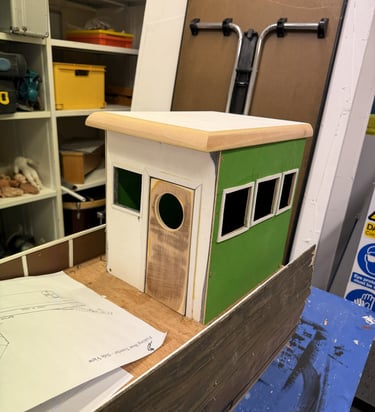
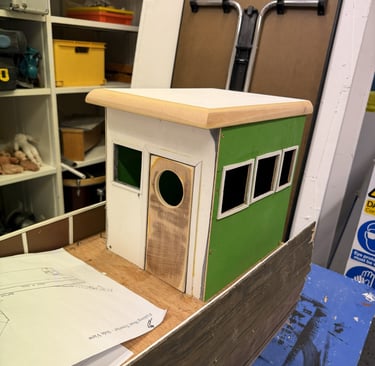
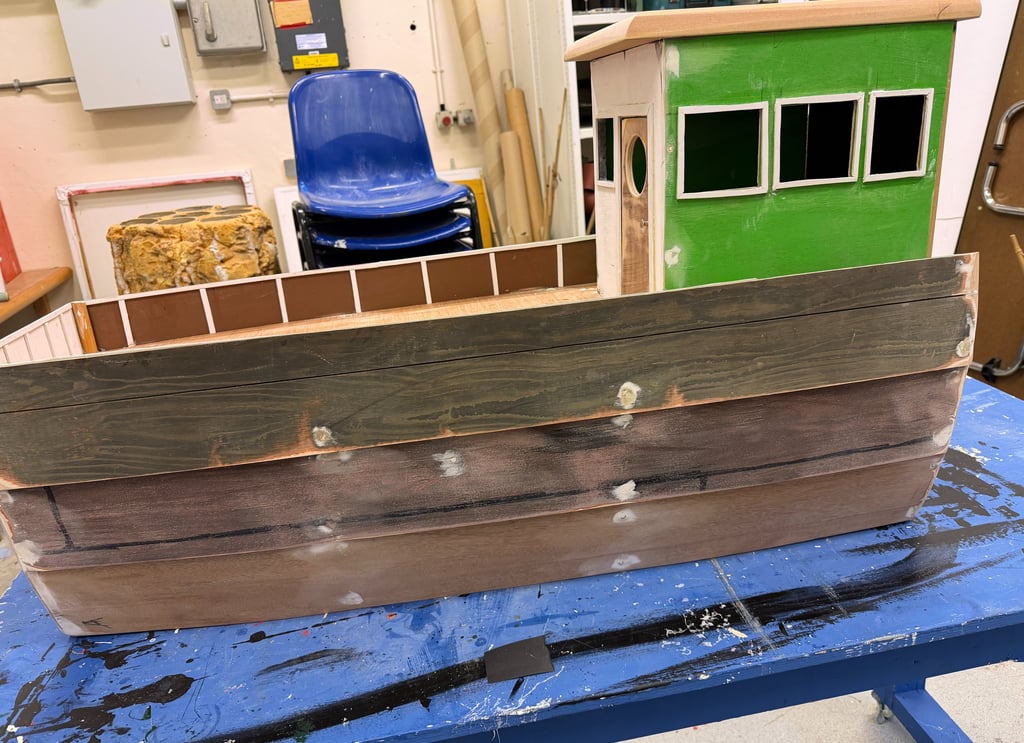
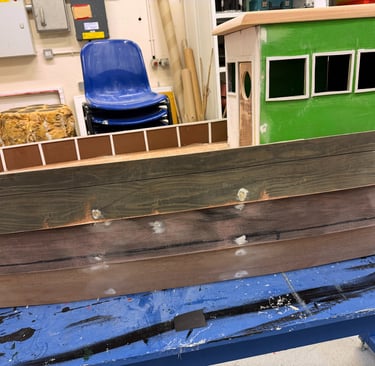
Fig. 2. Cardboard deck (Campbell, 2026).
Fig. 4. Cardboard boat (Campbell, 2026).
Fig. 3. Deck and supports (Campbell, 2026).
Fig. 5. First stage of build (Campbell, 2026).
Fig. 6. Boat hull complete (Campbell, 2026).
Fig. 7. Boat hull and cabin (Campbell, 2026).
Fig. 8. Cabin door (Campbell, 2026).
Fig. 9. Cabin roof (Campbell, 2026).
Fig. 10. Boat ready to paint (Campbell, 2026).
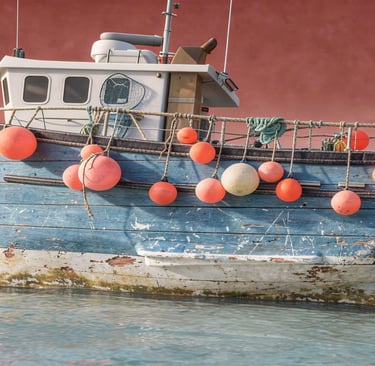
Fig. 1. AI-generated concept image created by the author using Freepik Pikaso (Freepik, 2026).
References
Freepik (2026) AI-generated image created by the author using Pikaso (prompt-based generation tool). Available at: https://www.freepik.com/pikaso/explore/1jTx8r4rEV (Accessed: 27 January 2026).
Business address: Voice of Drew, Carlisle, CA2 6ER | UTR: 7259771174 Copyright Drew Campbell 2024