
Scene Rebuild
Space station revised layout
EXPERIMENTAL NARRATIVE AND CONCEPT
Drew Campbell
4/22/20263 min read
Rebuilding the Space Station Environment
As I continued developing my experimental sci-fi scene in Unreal Engine for AVFX5102, I started to realise that I had unintentionally limited myself with my original environment layout. The scene looked visually interesting from a few angles, but once I began testing more cinematic camera movement and composition, I quickly discovered that the space itself was too restrictive. There simply was not enough room to create the kind of framing and movement I had originally imagined.
Rather than trying to force the existing scene to work, I decided to rebuild the environment from scratch using the same modular space station kit. Although this felt frustrating at first, it ultimately became a valuable lesson in environment design and planning. I realised how important spatial layout is when thinking about camera positioning, staging, and audience immersion, especially within virtual production and real-time environments explored throughout AVFX5102.
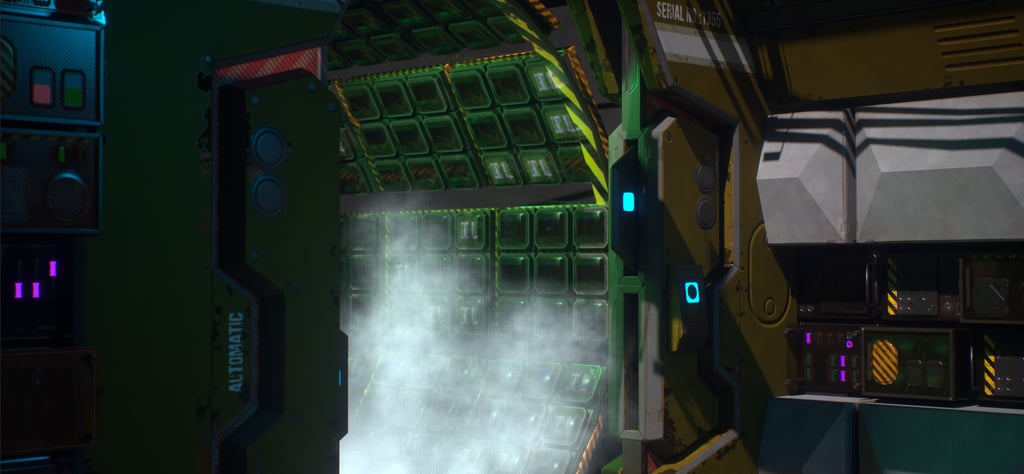
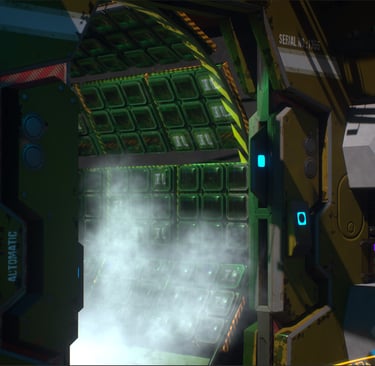
This second version of the environment included a corridor section leading towards the main room (fig 1,2).Adding the corridor immediately improved the sense of scale and depth within the scene and gave me far more flexibility with camera movement. It also helped the environment feel more believable and cinematic. I wanted the scene to feel inspired by classic science-fiction films, so I added an animated automatic door that opened as the character approached it. It is a small detail, but it instantly added more life to the environment and reinforced the sci-fi atmosphere I was aiming for.
I also began experimenting with atmospheric effects inside Unreal Engine using NiagaraSystems. Initially, I could have taken the easier route by downloading pre-rendered smoke or steam plates and applying them to planes within the scene. However, because this module encourages experimentation and technical exploration, I wanted to create something more original myself rather than relying entirely on existing assets.
I followed a tutorial to understand the fundamentals of Niagara smoke systems by YouTube user Peyton Varney (Varney, 2026) and then spent several hours testing different smoke textures, particle settings, movement speeds, opacity levels, and placement within the corridor (Fig 1 and 2). Achieving believable smoke proved far more difficult than I originally expected. Small adjustments completely changed the look and scale of the effect, and many early tests either looked far too thick or too artificial for the scene.
Eventually, after a lot of trial and error, I achieved a look that I was genuinely happy with. I placed the steam effect just before the automatic door so that it subtly catches the light and adds movement to the environment before the character enters the next space. This helped make the corridor feel more industrial and lived in, rather than appearing overly clean or static.
Looking back, rebuilding the scene was definitely the right decision. Although it added extra work, it allowed me to think more carefully about environmental storytelling, cinematic composition, and how atmosphere can influence audience perception. More importantly, it reinforced the value of experimentation, problem-solving, and iterative development, which are central themes throughout this module.
References
Varney, P. (2026). Making Smoke Particles In Unreal Engine 5 - Niagara Tutorial. [online] Youtu.be. Available at: https://youtu.be/omDpFnDi9fs?si=KA5KhQnUvyn02h2i [Accessed 20 Apr. 2026].
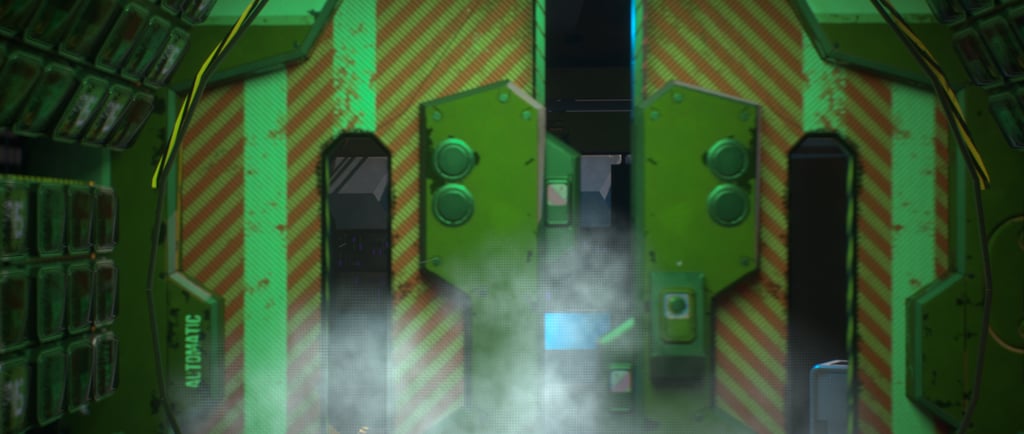
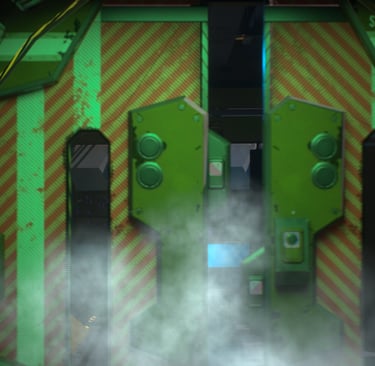
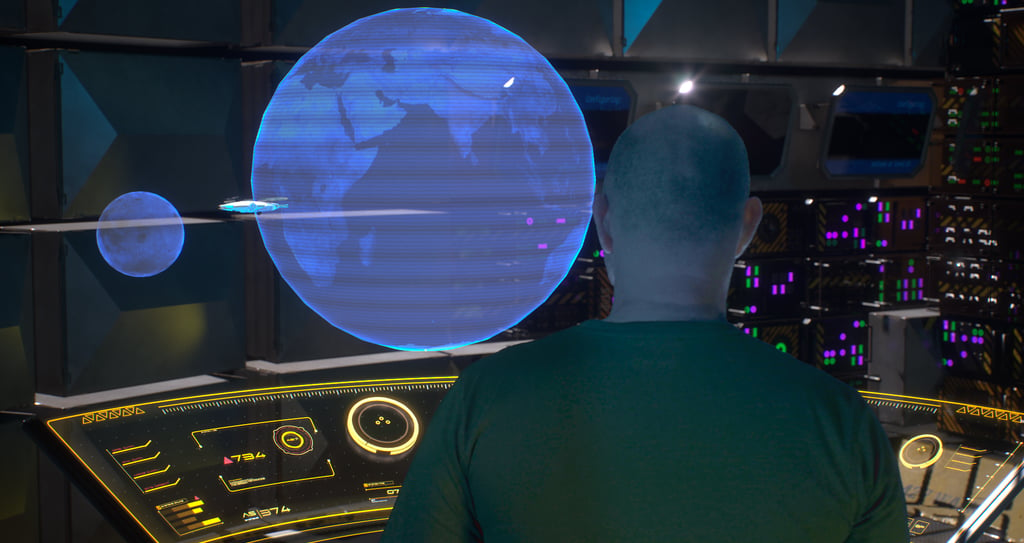
Fig 1. Corridor with smoke
Fig 2. Corridor and animated draw
Fig 3. Console desk, holograms and keyed footage of me
Business address: Voice of Drew, Carlisle, CA2 6ER | UTR: 7259771174 Copyright Drew Campbell 2024